The Throne Traded for Sleep: Kumbhakarna, Bhakti and the Opening of the Ears
In the morning satsanga of November 2, 2026, Swami Jyotirmayananda taught that learning without bhakti inflates the ego, and read Kumbhakarna's boon of sleep as the ears that will not open to Hari Katha.
The satsanga opened with prayers to Lord Ganesha, Goddess Saraswati, Lakshmi-Narayana, Goddess Durga and the Guru, and with the invocation to Lord Rama of the Raghu dynasty: his complexion like a blue lotus, tender and delightful in appearance, Sita seated at his left side, a powerful bow and arrow in his hands. After the Hare Rama mantra came a short poem on the supreme peace of the Self. The peace in the depths of the ocean, beyond the surging waves, and the peace in the vastness of the universe, beyond the Milky Way, is but a wave in the ocean of peace that dwells within the heart: beneath the waves of the senses, above the mist of desires, beyond the clouds of time and space. The Self is silence supreme, the very embodiment of peace.
The Victory of Ignorance
Simply intellectual knowledge, Swamiji taught, inflates the ego. A person may then claim aham brahmasmi (I am Brahman), but the claim is ego-based, and so is the victory it seems to bring. Swamiji called it the victory of ignorance, the power of ignorance. The more ignorant one is, the more one gives glory to oneself and becomes inflated with ego, thinking that no one can be more heroic.
Such a person comes to wear a terrifying face, a distorted face, a distorted appearance. The opposite is a face shining with divine grace: the face of one who inspires people, the gracious face that is always interested in bringing spiritual strength to everyone.
When Bhakti Enters
Ego-based victory, Swamiji explained, does not turn to bhakti. Such a person quotes the scriptures without bhakti and has not really understood the verses. The scriptures are meant to inspire one to become humble, yet without devotion one becomes more and more conceited: I have the wisdom of the Upanishads, the wisdom of the Brahma Sutras, I will awaken kundalini shakti.
But when bhakti enters, that ego-based attainment is completely removed. Bhakti begins to give real scriptural insight. Every verse that once inflated the mind is now read differently, and when someone begins to praise how much you know, you do not allow ego-based pride to rise. "You simply say, I know nothing." The real knower is God.
So the egoistic aspect of aham brahmasmi is burned up, and the ego bows down. "Humility begins to rule over you." Humility, Swamiji said, is the characteristic of spiritual progress.
Kumbhakarna's Boon
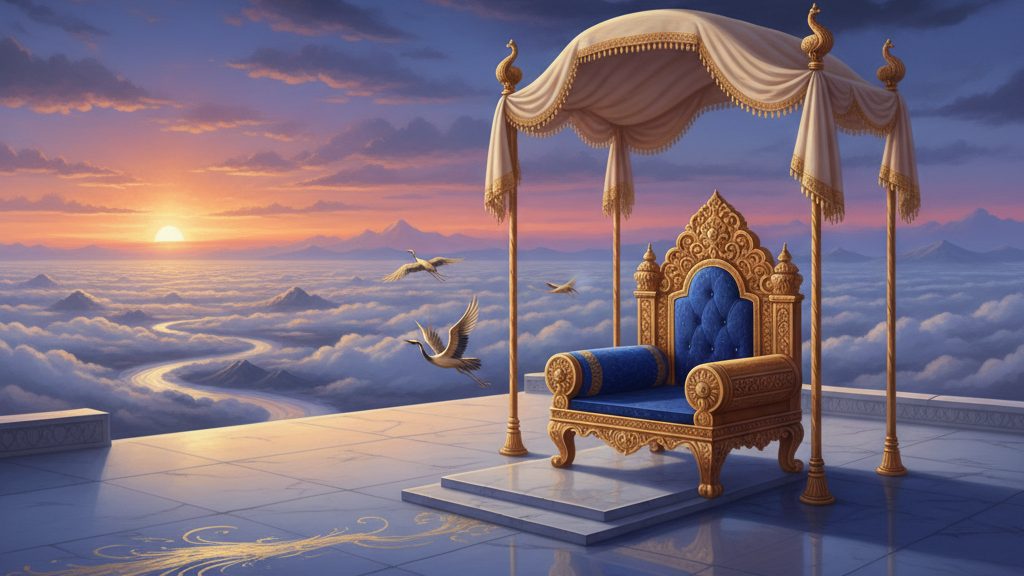
Swamiji then turned to the Ramayana. Kumbhakarna had received the boon of sleeping for six months and waking for only one day. He had practiced austerity with a wish: may I have rulership over heaven, the seat of Indra. But when Brahma appeared to grant the boon, Goddess Saraswati sat on his tongue. He forgot about Indra and asked for sleep instead of the divine throne. Now he is asleep.
To awaken Kumbhakarna, Swamiji explained, means bringing divine teachings into the ears. Demonic ears have stopped listening to divine teachings; they listen only to things that please, to mundane pleasures. When the Kumbhakarna type operates through a person, the ears do not like to listen to any teaching, and they become the abode of venomous snakes. The eyes become like peacock feathers, beautiful, and the mind is deeply involved in beautiful appearance.
All of that moves away when the ears open. "Ears open through spiritual teachings." Then there is no more mundane merriment. That type of food awakens Kumbhakarna and prepares him to be sublimated by Rama.
Ears That Become Channels of Hari Katha
The ears, Swamiji taught, become channels of Hari Katha, the stories of the Lord, which are presented in countless ways. Listening to Hari Katha lets people develop a deep interest in listening, from the Ramayana to the Bhagavatam to the Shiva Purana. "There is no end to it." No matter how much one listens, one is always prepared to listen again and again, never bored or tired. In this way the inner Kumbhakarna is sublimated.
The story also holds a warning. One may face terror and troubles every moment, and yet the ears do not open to kirtan, to bhajan, to the power of mantra. That awakening, Swamiji said, is what this episode is about.
A Face That Shines
The satsanga closed with a prayer for a shower of the grace of God, with the blessings of shakti, bhakti and mukti, the Mahamrityunjaya mantra (tryambakam yajamahe), and the prayer sarve bhavantu sukhinah, that all may be happy, all free from illness, all see what is auspicious, and none suffer sorrow.
When the heart brings out this prayer, Swamiji said, one becomes free from that distorted appearance, and the face shines with divine grace. One is no longer subject to aging; one becomes a sage, no matter how old, and people are drawn to sages. The teaching is that you never age. "You are not the body."
Terms in This Satsanga
- bhakti — devotion; what removes ego-based attainment and lets the scriptures teach humility.
- aham brahmasmi — I am Brahman; an ego-claim when it comes from mere intellectual knowledge.
- Hari Katha — the stories of the Lord, through which the ears open.
- kirtan, bhajan — devotional chanting and song, to which closed ears do not open.
Follow the WhatsApp channel at jyotirmayananda.org/whatsapp.