The Chariot of Dharma: Horses of Virtue, an Enduring Banner and the Miracle of Grace
In the morning satsanga of November 16, 2026, Swami Jyotirmayananda taught how divine grace turns adversity into blessing, and presented the chariot of dharma, whose banner, horses, armor and arrows are the qualities of the seeker.
The satsanga opened with the invocation to Lord Rama, blue as a lotus and tender in appearance, with Sita at his left side, followed by the Hare Rama mantra. Swamiji then read a poem on the miracle of divine grace. When grace showers, the dashing clouds of sorrows turn into a dazzling array of joy. The dreadful desert of despair turns into groves of peace and plenty. The thorns of adversities turn into blossoms of blessings. From a heart that has been like a rock, a stream of tender divine love flows. By grace, all challenges in life turn to guiding lights that lead the soul to immortality, and to the revelation: I am Brahman, I am the absolute Self.
The Three Aspects of Grace
Grace, Swamiji explained, works in three aspects. It inspires you from within yourself. The Guru's grace draws you to satsanga. And satsanga gives you an amazing insight into what you study from your scriptures. Before, the study stayed superficial; now your study becomes a kind of spiritual food.
"As you study, as you do bhajan, as you repeat a mantra," all this paves the way to turn every adversity into miraculous change. The three aspects of grace operate together, and the result is a revelation that you are not the body. "You are not a wandering soul." "You are Shiva." Then you yourself become the channel through which those three aspects of grace shower on others. "Your personality becomes like a spring season." No one knows where the spring has come from, yet it reaches every tree, every blossom, every leaf. Swamiji prayed that the grace shower on all.
Agastya and the Ocean
As an illustration of the Guru's grace, Swamiji recalled Agastya, a guru who drank the entire ocean in three sips. It is that grace, he said, that is now heard through the Aditya Hridayam. He then gave its short version, the names of the Sun recited in Surya Namaskar, and asked that children be trained in the practice of Surya Namaskar in a playful way.
Grace Behind Ravana's War
Even the enemy of Rama, Swamiji taught, is held by grace. Ravana thinks he is going to conquer Rama, yet grace is working a miracle for him: the more he wishes to confront Rama, the more he is coming close to his salvation. All the time he has thought of Rama as the enemy, and when you constantly think of someone, you repeat his name. He repeats it in a disrespectful way, but he repeats it. That, Swamiji said, is a miracle of divine grace.
The same is true of the sons Ravana sent into battle. He thought he was directing them to conquer, but behind his distorted thinking, "divine grace is operating." Each son met a glorious death, a blessing none of them would otherwise have had. Ravana did not realize how much blessing he gave, and now he himself is getting prepared.
The Chariot of Dharma
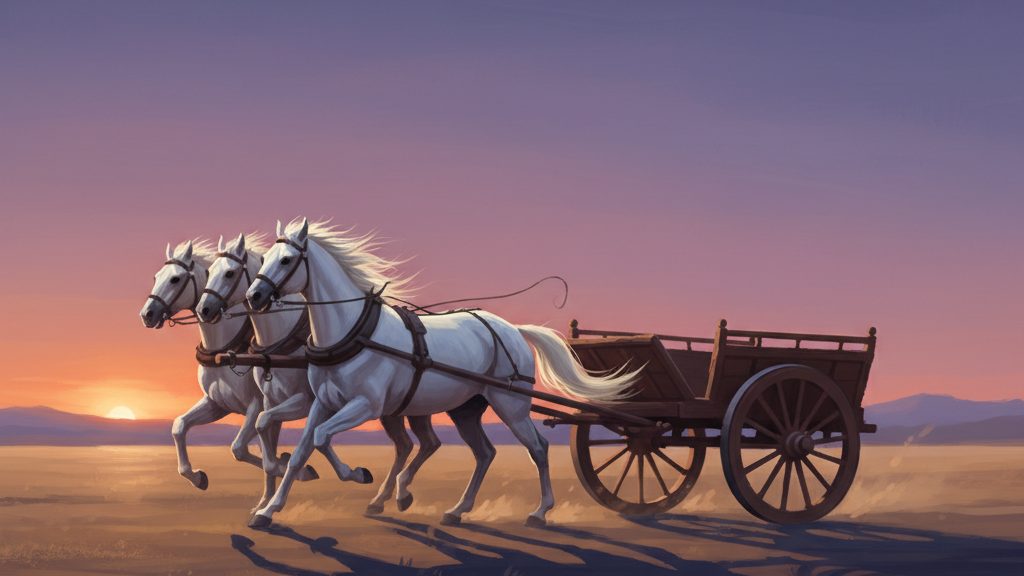
Then Swamiji presented the chariot of dharma, the Dharmaratha, which he called very profound wisdom.
Shaurya is your valor, your spiritual strength. Dhairya is fortitude: the stronger you are, the more you have the ability to wait. You wait as one waits to watch a wonder, or to receive a great blessing, and "that waiting is not painful."
Satya is the enduring banner. Satyameva jayate: "Satya will always bring victory."
Shila is humility. The more spiritual strength one has, and the more victorious one becomes, the humbler one becomes. So humble that ego has no place; one does not compare oneself with others. That type of humility leads to divine victory.
The horses are bala, spiritual strength; viveka, the discriminative intellect; dama, control of the senses; and parahita, doing good to others. Forgiveness, compassion and samata, equality of mind, are what link the horses to the chariot. All the bhajan, kirtan and japa one does becomes the driver of the chariot. Virati, developing detachment from the world, becomes your protective armor.
Then comes the axe, the parashu. Swamiji recalled Parashurama, who with his axe cut off his mother's head. Here the mother refers to mundane attachment. The mother is not just a physical body; through that body runs your karmic movement. So instead of glorifying that attachment, you cut it off, and you discover that she is the Divine Mother.
Buddhi is a powerful, piercing arrow, joined to direct intuitive wisdom and an unflinching mind. The many arrows you discharge are your great qualities. When you shoot your enemy with them, you bring great quality into your enemy. He came with a demonic face, but you shoot that enemy, "and his face becomes angelic."
The worship of the guru, Swamiji explained, refers to the one who imparts the scriptures to you, and the guru is the power of grace, at work through satsanga. By that grace poison becomes nectar, and the entire ocean of the world becomes like the footprint of a cow. Whoever has all these qualities, his personality has itself become a chariot made of dharma, and he will have more and more insights.
The satsanga closed with a prayer that divine grace shower on all, the Mahamrityunjaya mantra, and the prayer that all be free from disease and all see what is auspicious.
Terms in This Satsanga
- satsanga: the company of truth; where the Guru's grace draws the seeker.
- Dharmaratha: the chariot of dharma, whose parts are the qualities of the seeker.
- shaurya: valor, spiritual strength.
- dhairya: fortitude, the ability to wait without pain.
- shila: humility in which ego has no place.
- viveka: the discriminative intellect, one of the horses.
- dama: control of the senses, one of the horses.
- parahita: doing good to others, one of the horses.
- samata: equality of mind.
- virati: detachment from the world; the protective armor.
- parashu: the axe that cuts off mundane attachment.
- buddhi: the intellect; the powerful, piercing arrow.
Follow the WhatsApp channel at jyotirmayananda.org/whatsapp.