The Jackfruit and the Shakti Lance: Grief, Ego and a World of Friends
In the morning satsanga of November 17, 2026, Swami Jyotirmayananda taught that grief rests on the ego, that the one who realizes he is Shiva and not the jiva sees the whole world as friend and brother, and that both sorrow and festivity are tests of serenity.
The satsanga opened with salutations to the Guru and the invocation to Lord Rama, the Lord of the Raghu dynasty, whose complexion is like a blue lotus, tender and delightful in appearance, with Sita at his left side and a powerful bow and arrow in his hands. Then came the Hare Rama mantra.
Swamiji read a poem on the relentless flow of life. In that flow, heights that once staggered the mind are brought far below, and everything moves toward the ocean of the Self. The sun and moon that shone so bright now glimmer with gentle light, as the soul makes its ascending flight to the summit of enlightenment. Hard rocks are pulverized, dark clouds are dispersed, and even vast space and time vanish with the blast of divine grace. The poem closed on the realization so'ham: I am That, That am I, the absolute Self.
Flowers Without Fruit, Fruit Without Flowers
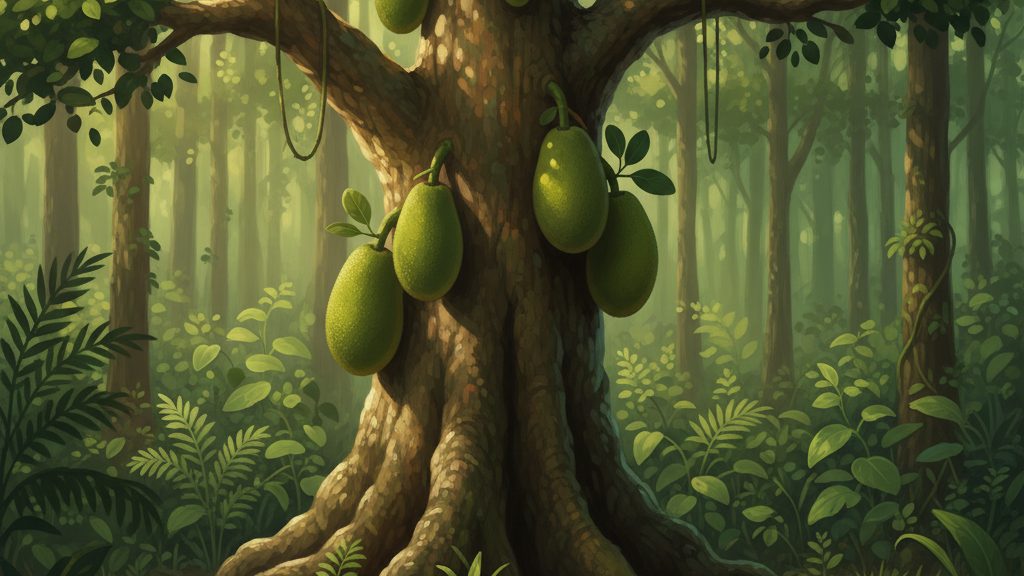
Early in the satsanga, Swamiji gave an image from the world of trees. The flamboyant tree brings out so many flowers, but not a single fruit; all those flowers simply fall. Another kind of tree gives beautiful, fragrant flowers as well as fruits, both. But the jackfruit makes no announcement at all. It does not say anything, and suddenly the fruit is there. Swamiji called it the miracle of the jackfruit.
The Shakti Lance
Returning to the battle in Lanka, Swamiji asked what the lance that Ravana hurled represents. It is called the shakti, a weapon with "The power of Brahma behind it." In the fighting that followed, Ravana was paralyzed, and his charioteer carried him away from the field.
From that moment Swamiji drew a teaching about the word for charioteer, sarathi. The common word saathi means a great friend, and the quality of a true saathi is that he is focused on removing apathy. Krishna became the sarathi of Arjuna, and in that state gave the entire Gita. When God Himself takes over your spiritual movement, Swamiji said, nothing is impossible. With the divine sarathi guiding, the whole wisdom of the Gita begins to flow.
Grief Rests on the Ego
The Gita, Swamiji explained, begins with grief: the troubles that attack the mind and create sorrow. As its wisdom unfolds, all that grief moves away, because it has no reality. Grief, he taught, stands on the basis of the ego.
When the mind is inflated with ego, it sees the whole world through the lens of mortality. The world, all one's relatives, and one's own body will not stay. So the mind is always in grief, watching relatives depart and waiting for its own end. As the jiva, the individual soul bound to the body, one cannot escape that fear.
But when it is realized that you are not the jiva, that you are Shiva, the entire world becomes the glory of Brahman. When there is surrender, saranagati, and the ego has been effaced, the revelation comes. "Your real I am shines." Then, Swamiji said, "There's no mortality, nobody dying." It is all Sita Ram.
The Whole World as Friend
With divine, intuitive vision, Swamiji continued, there are no enemies around. All are friends. Every squirrel is inspiring you; storms, rains and hurricanes too are friends. "So the entire world becomes friends."
He gave another word for this: vishva bandhutva, universal brotherhood. Your dear brother is not limited to your relatives. A biological brother is subject to mortality, and through that bond you suffer loss. When the vision changes, "The entire world is your brother." And in the next breath: "The entire world is your friend." Then the body and its existence become an instrument of kalyana, of doing good to the entire world and inspiring all to follow the path of dharma.
Sorrow and Festivity Are Both Tests
Swamiji then spoke of duhkha and sukha, pain and pleasure. People enjoy festivities, but "Festivity does not stay." After the festival comes a bigger challenge, and the mind slides into apathy and sorrow. Sorrow, he taught, is given so that you may "Awaken your inner strength." And gain, worldly success and festivity are a test too. The question each time is the same: are you going to be shaken?
The Ramayana gives the illustration. Whether Rama was being given the coronation or being sent to the forest, he did not fall into despair. He remained in serenity, and that serenity is a gateway to liberation.
The satsanga closed with a prayer for a shower of grace, the Mahamrityunjaya mantra, the prayer that all may see auspiciousness, and asato ma sad gamaya: lead us from the unreal to the real.
Terms in This Satsanga
- shakti — the lance Ravana hurled, with the power of Brahma behind it.
- sarathi — charioteer; Swamiji linked it to saathi, a great friend who removes apathy.
- jiva — the individual soul identified with the body; the seat of grief and fear of death.
- saranagati — surrender, by which the ego is effaced and the real I shines.
- vishva bandhutva — universal brotherhood; the whole world as one's brother.
- duhkha / sukha — pain and pleasure, both of them tests of serenity.
Follow the WhatsApp channel at jyotirmayananda.org/whatsapp for each morning's satsanga notes.