Guest essay · What the Ramayana means
Ramayana: Beyond the Spectacle to the Inner Journey
The film Ramayana: Rise of a Legend (Part 1, directed by Nitesh Tiwari) opened in theaters worldwide on November 5, 2026. If you left the theater wondering what the story means, this essay by a cardiac surgeon and longtime student of Swami Jyotirmayananda reads it as a map of the inner journey.
I finally saw Ramayana in a theater. Before going, I came across many videos and blogs critical of the content of this movie. While the visual spectacle is certainly worth watching and the technology brings Indian filmmaking to the forefront, the Ramayana is a living, breathing core philosophical fabric of India. It could have been brought to the world stage without compromise. Having said that, I hope this production creates sufficient interest for viewers to explore the original, timeless composition by Sage Valmiki.
The present writing offers a totally different perspective than what is seen in the media, whether pro or con.
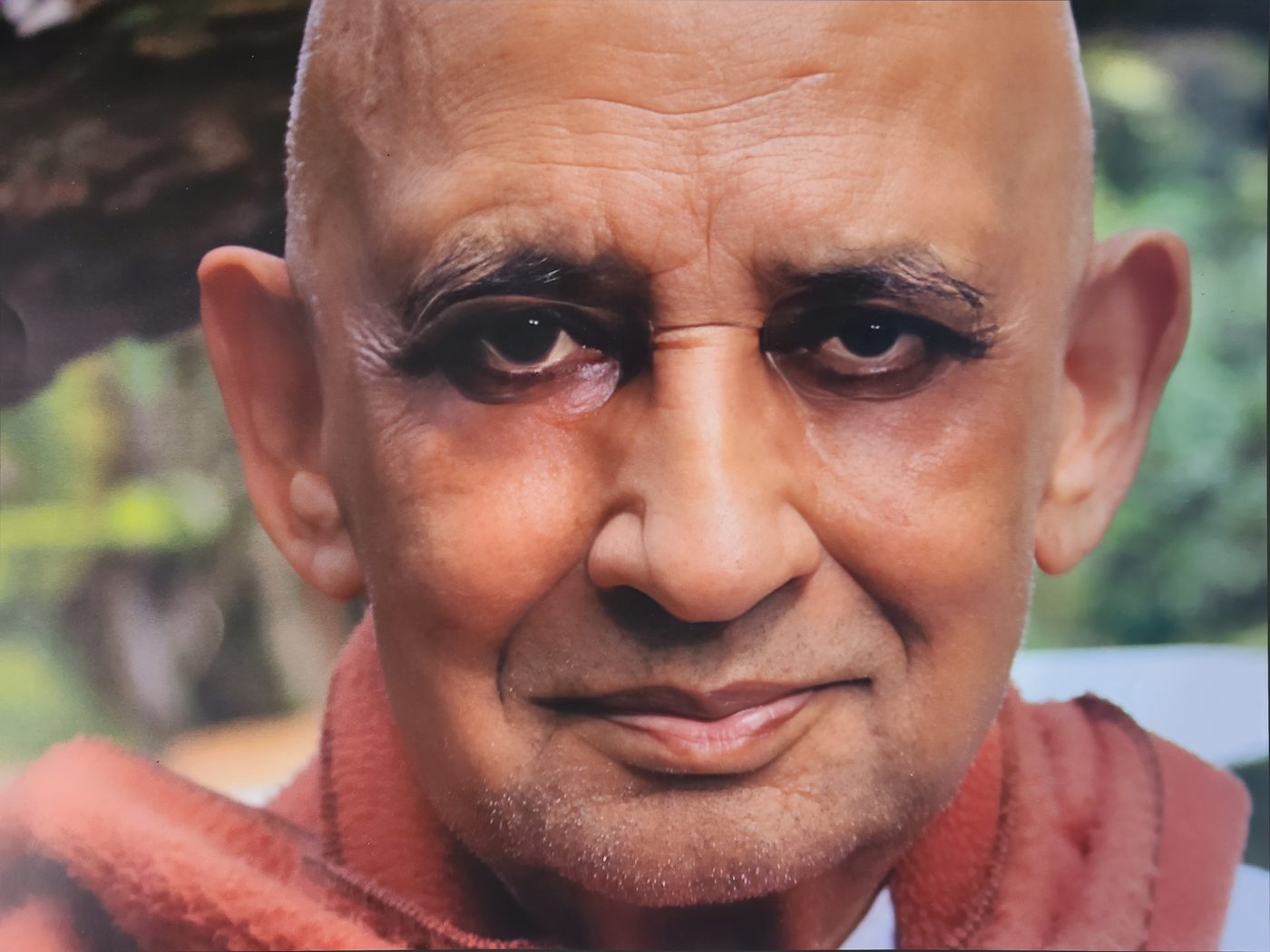
Here is my take, based on over three decades of blessed tutelage under H.H. Swami Jyotirmayananda. At age 95 (born 1931), he is a direct disciple of H.H. Swami Sivananda Maharaj of Rishikesh.
One may recall Sri Ramana Maharshi (1879–1950), who is most famously known for raising the question in 1902, “Who am I?” This question is well documented in many of his subsequent writings and lectures. The central inquiry of his life and teachings has its roots in Adi Shankaracharya’s centuries-old hymn, the Atma Shatakam (Nirvana Shatakam), composed approximately in the 8th century, which begins with: “Mano buddhi ahankara chittani naham” (I am not the mind, intellect, ego, or memory).
Swami Sivananda was a physician with an MBBS degree from Tanjore who went to practice medicine in British Malaya. He returned to India in 1923 and established his ashram in Rishikesh. He concluded that our spiritual heritage across multiple scriptures—including the Vedas, Upanishads, and Puranas—holds a deeper, yet undiscovered meaning. He wrote nearly 200 books and delivered thousands of lectures on one central theme: the pathway and roadmap to the spiritual journey of Self-discovery. Understanding the truth of the Atma Shatakam and the answer to “Who am I?” lies hidden in plain sight within these texts.
Swami Jyotirmayananda further expounded on this theme in many of his writings under his Mysticism series—including Mysticism of the Ramayana, Mysticism of the Mahabharata, and Mysticism of Devi Mahatmya.
Accordingly, the Ramayana is not merely an external historical drama or a tale for cinematic special effects; it is an allegorical roadmap of the human soul. When viewed through this mystical lens, every character and event represents an inner reality.
The main characters at a mystical level are as follows:
- Rama represents the Supreme Self (Atman), the pure consciousness that resides within us all.
- Sita symbolizes the individual soul (Jiva) or pure intellect (Buddhi), which yearns to remain united with the Divine.
- Ravana embodies the ten-headed ego—powered by the five senses of perception and five organs of action—that abducts the soul away from its true spiritual home.
- Lakshmana stands for unwavering spiritual discipline and dispassion (Vairagya), which tirelessly serves the Higher Self.
- Hanuman represents spiritual strength and controlled life-force (Prana), the vital bridge that crosses the ocean of worldly illusion to reunite the soul with the Supreme.
Here is the sequence of the journey:
The Mysticism of Ramayana in brief
At a deeper mystical level, the legend of Lord Rama gives us a road map of our spiritual journey to answer the question “Who am I?” Lord Rama, the incarnated soul, is on the quest to attain liberation (moksha). His intellect is represented by Devi Sita, who is in the process of being purified to help Lord Rama regain the throne in Ayodhya.
(A-Yudh, where the fight no longer exists and the journey is concluded… Ramarajyam.)
Lord Rama must leave the comforts of the royal palace and enter the forest of world process. Here he learns spiritual insights from many sages and saints (satsanga).
Buddhi (intellect) is the partner in this internal journey of self-discovery. When Buddhi is externalized and is under the influence of a glittering sense object (golden deer), Buddhi gets hijacked and comes under the control of lower emotions and faculties (kama, krodha, lobha, moha, etc.).
The intellect is also abducted into the realms of the deep subconscious (Lanka).
Lord Rama, accompanied by spiritual discipline, sadhana shakti (Lakshmana), has to get the help of Hanuman (the everlasting, Chiranjeevi, Atma bala, the spiritual strength). He then needs to round up all externalized uncontrolled emotions and thoughts, the monkeys and bears, and befriend Vibhishana, the Sattwa element. Upon Hanuman reaching into Lanka and finding the location of Devi Sita in Lanka, he burns it (clearing past negative impressions, the ashubha vasanas). Lord Rama then builds a spiritual link to Lanka, sublimates all the negative elements, and returns to Ayodhya with a purified intellect.
This concludes the spiritual journey.
When we watch a movie on the big screen, we are entertained by an external battle of good versus evil. Yet, the true Ramayana is unfolding within our own consciousness every single day. If this modern film inspires even a handful of viewers to look past the CGI and ask “Who am I?”—to rescue their own inner Sita from the grip of the ego—then this cinematic spectacle will have served a truly sacred purpose.
Going deeper
Swami Jyotirmayananda teaches the Tulsi Ramayana live every morning at 8:25 AM Eastern, and notes from each session are posted here. His full Ramayana class, 312 lectures, is free on YouTube. His book Mysticism of the Ramayana is listed among his writings.
Begin with The Four Paths
A free course by email: Swami Jyotirmayananda’s teaching on the four paths of yoga, in his own words. One short lesson every other day. Unsubscribe whenever you wish.
Begin The Four Pathsfree, by email, one lesson at a time