
The World’s Three Great Promises — and Why They Fail
You can rule the world. You can fill your children’s children’s accounts with wealth. You can become so famous that strangers speak your name with reverence. And you will still not find peace.
This is not a modern diagnosis of burnout or existential crisis. This is a revelation delivered thousands of years ago by Sage Vasistha to Prince Rama, preserved in one of the most magnificent scriptures of the Vedantic tradition — the Yoga Vasistha — and brought to life in this generation through the voice of Sri Swami Jyotirmayananda, a direct disciple of Swami Sivananda.
In Section 57 of the Sthiti Prakarana, Sage Vasistha states plainly: whether one rules the heavens or the earth, without the extinction of vasanas and the resulting knowledge of the Self, supreme peace remains out of reach. Swamiji’s commentary on this verse is not merely philosophical — it is a surgical map of the human mind, and a practical guide for every sincere aspirant.
Sage Vasistha identifies what he calls the majority — all those not yet established on the path to enlightenment — as people led by Māyā. But even within Māyā, Swamiji explains, there is a cosmic push. The universe is silently steering every soul toward its own liberation, whether the soul cooperates or resists.
For those who have not yet consciously turned inward, fulfillment is sought through three channels, known in Sanskrit as the three eshanas:
- Putreshana is the longing to be remembered — to build something so lasting that your great-great-grandchildren point to it and say, “My forefather built this.”
- Viteshana is the accumulation of wealth so vast that it outlasts your own lifetime, continuing to sustain those who come after you.
- Lokeshana is the hunger for recognition — to be well-regarded, powerful, and significant in the eyes of the world.
Each of these is a deeply human aspiration. And each of them, Swamiji says, belongs entirely to the realm of illusion. Not because wealth or legacy are inherently shameful, but because they are impermanent — and they are supported by what the Yoga Vasistha calls klishta vasanas, afflicted impressions rooted in the kleshas.
The Five Kleshas and the Seven-Link Chain of Pain
The kleshas — the five root sources of painful experience — are:
- Avidyā (ignorance)
- Asmitā (egoism)
- Rāga (attachment)
- Dvesha (hatred or aversion)
- Abhinivesha (fear of death)
These five are not merely bad habits. They are structural features of unexamined consciousness, and they continuously generate impressions in the unconscious mind.
Swamiji traces the chain of causation with remarkable precision:
- Pain exists because of embodiment.
- Embodiment exists because of karma.
- Karma is sustained by rāga-dvesha — the mind’s compulsive movement toward what it likes and away from what it dislikes.
- Rāga-dvesha is generated by egoism.
- Egoism arises from aviveka — the inability to discriminate between the Self and the not-Self, between pure awareness and the body-mind complex.
- And aviveka itself is rooted in avidyā — fundamental ignorance of one’s own nature.
Seven links. One chain. And each one follows from the last with the inevitability of arithmetic.
Swamiji illustrates rāga-dvesha with characteristic warmth: you are having a perfect afternoon, sunlight and breeze, and yet your mind has slipped five years backward to a Christmas dinner, obsessively cataloguing who liked you and who did not. The present moment, filled with genuine beauty, goes unnoticed. This is the cost of rāga-dvesha.
The Four States of Vasanas — A Map for Aspirants
One of the most practically valuable sections of this lecture concerns the four states in which vasanas exist within us. Understanding where we stand is the beginning of intelligent spiritual effort.
- The first state is prasubta — dormant. This is the condition of young children, in whom the kleshas have not yet fully awakened. There is a natural innocence, an openness, that gives even a glimpse of the enlightened state. But childhood innocence is prasubta, not enlightenment.
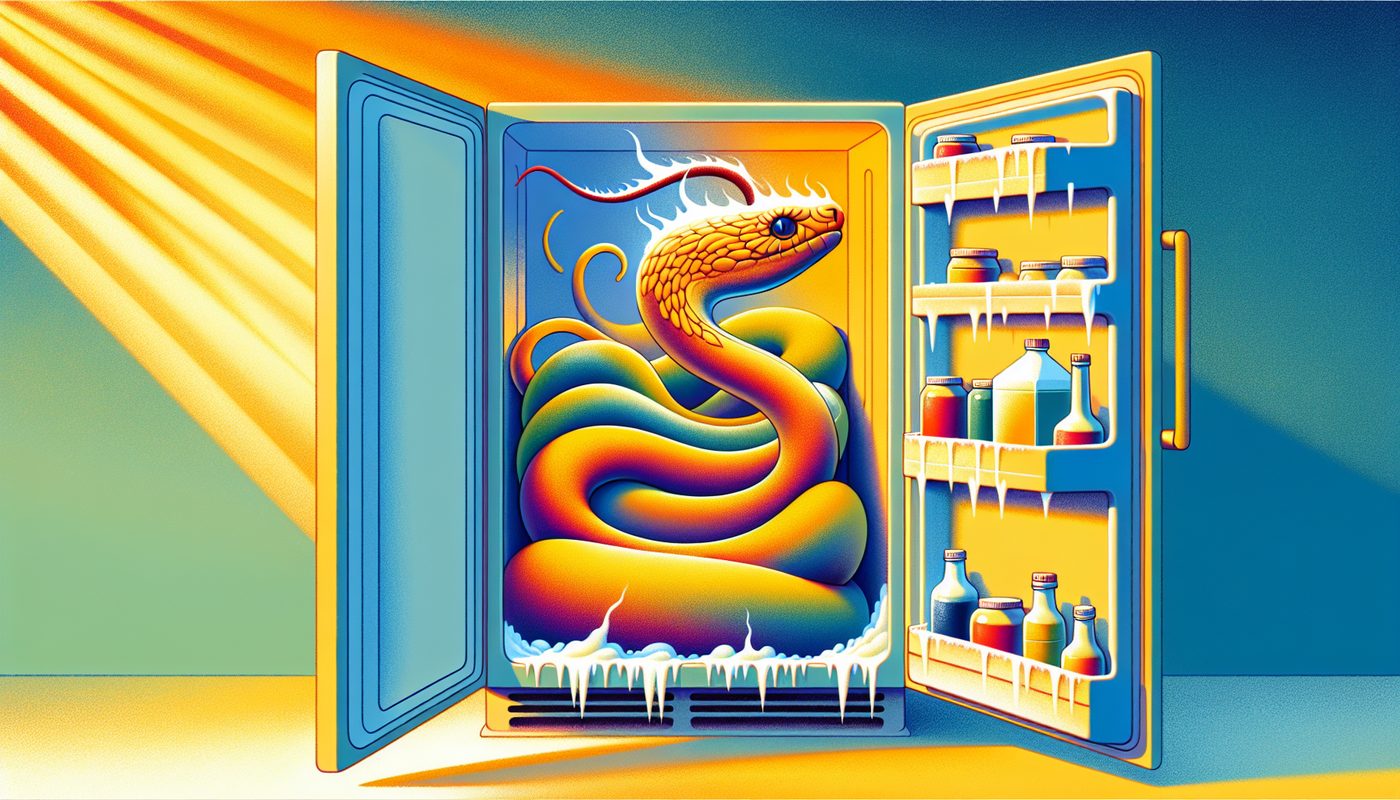
- The second state is tanu — attenuated. Through sustained satsanga, regular sadhana, and a harmonious spiritual environment, the kleshas grow quiet. A sincere aspirant may go an entire month without significant anger or anxiety. This is real progress. But Swamiji issues a careful warning here: attenuated is not extinguished. He uses the image of a snake placed in a refrigerator — it becomes still, even manageable — but the moment warmth returns, the snake is exactly what it always was. Do not mistake calm for liberation.
- The third state is vikshipta — scattered, or hidden. Here, the negative impressions remain very much active, but the person has learned to conceal them — from others, and often from themselves. Anger, greed, and resentment are swept under the metaphorical rug before guests arrive. The inner world remains cluttered.
- The fourth state — the udāra, or fully manifested — is when the vasanas have taken complete possession of the personality. The person is angry and does not even know they are angry.
And then there is the goal: the state in which vasanas have been burnt by the fire of Jnana. They are present in their residual form — sustaining the sage’s remaining prarabdha karma — but they no longer generate new impressions, new karma, or new birth. Like roasted seeds, they cannot germinate.
The Integral Path — Karma Yoga, Bhakti, and the Purified Heart
How does one move from klishta vasanas toward their extinction? Swamiji points to the integral approach that is the hallmark of his lineage.
Karma must be transformed into Karma Yoga — not by abandoning action, but by performing it without ego-identification, as an offering, as service to the divine. Good action purifies the heart automatically. It is not a reward for purification; it is the mechanism of purification.
Simultaneously, the feeling nature must undergo a divine transition. Every experience of love — for a child, for nature, for beauty — has God as its source. The spiritual aspirant learns to recognize God in the vehicle of love, not to deny the love itself. This is Bhakti — not as mere devotional sentiment, but as a progressive clarification of what love actually is and where it actually comes from.
As love deepens and karma purifies, the intellect begins its own movement toward discrimination — toward Jnana. And when Jnana matures, it becomes what Swamiji calls “mystic fire.” In that fire, impressions based on misunderstanding and ignorance simply dissolve.
The Expansive Heart — What Liberation Actually Looks Like
Swamiji concludes by describing what the extinction of vasanas actually produces in lived experience. The heart, freed from the narrow boundaries of ego-love, becomes expansive. Where once our prayers and goodwill circled only our nearest dear ones, now all life is felt as intimately as family. “Sarve bhavantu sukhina — may all beings be happy” is no longer a recitation. It is the natural state of the heart.
The sage, Vasistha tells us, holds the entire universe as a small fruit in the palm of the hand. Not because the world has shrunk, but because the sage has grown — beyond ego, beyond vasanas, into the fullness of the Absolute Self.
And this awaits every aspirant. Swamiji says it with quiet certainty: you are bound to experience it, whether you like it or not. The only question is how swiftly you choose to move.
SCHOLAR’S CORNER
SCRIPTURAL CITATIONS IN THIS LECTURE
- Yoga Vasistha, Sthiti Prakarana, Section 57
Primary source text. Teaching of Sage Vasistha to Rama. - Isha Upanishad — Purnamadah Purnamindam (opening mantra)
Chanted at lecture opening: “That is whole; this is whole.” - Yoga Sutras of Patanjali — Pancha Klesha framework
Avidya, Asmita, Raga, Dvesha, Abhinivesha cited directly. - Ramayana — “Garal sudha ripu kare mitai” (Tulsidas)
“Poison becomes nectar; enemies become friends.” - Katha Upanishad / Mundaka Upanishad (implied)
“Tasya bhasa sarvam idam vibhati” — By His light all shines. - Bhagavad Gita — Karma Yoga framework (Chapter 3)
Swamiji’s teaching on action transformed into offering.
GLOSSARY
- Vasanas — Subtle impressions or tendencies stored in the unconscious mind, formed by past actions and desires. The root cause of repeated birth.
- Kleshas — The five afflictions: ignorance (avidyā), egoism (asmitā), attachment (rāga), aversion (dvesha), and fear of death (abhinivesha).
- Eshanas — The three primal longings: putreshana (progeny/legacy), viteshana (wealth), and lokeshana (recognition/fame).
- Prasubta — Dormant state of vasanas, as in young children.
- Tanu — Attenuated state, vasanas weakened by sadhana but not extinguished.
- Vikshipta — The scattered or concealed state; negative impressions hidden.
- Udāra — Fully manifested; vasanas in complete expression.
- Prarabdha — The portion of karma that has already begun to fructify and which sustains the current embodiment even after enlightenment.
- Viveka — Discrimination; the capacity to distinguish the Self from the not-Self.
- Avidyā — Fundamental ignorance; misidentification of the Self with the body-mind.
- Sādhana — Spiritual practice; the daily discipline of the aspirant.
- Satsanga — The company of truth; a spiritually harmonious community or gathering.
- Karma Yoga — The path of selfless action, transforming ordinary work into worship.
- Atman Jnana — Knowledge of the Self; the direct realization “I am Brahman.”
- Māyā — The creative power of illusion; the cosmic force that makes the unreal appear real and the Real appear absent.
Watch the full lecture here: https://youtu.be/OapPim5AfJo
Join the Digital Ashram and receive daily wisdom: https://bit.ly/4dgDWKn
Support the Jnana Yagna — help this teaching reach every seeker: https://bit.ly/3N3obPo
This study guide is drawn from the archived teachings of Sri Swami Jyotirmayananda.