
This class covers three sutras of the Samadhi Pada, 36 to 38. Swami Jyotirmayananda returns first to sutra 36, the mind led beyond grief into light, and names what keeps it dark: putting things off, dullness, old memories, and a love that turns into dependence. His images are the sky that clouds cannot touch, a mother bird who pushes her chick from the nest, and Sita, who never lost her hope. Sutra 37 removes the lack of dispassion by coloring the mind with thoughts that provoke vairagya, and Swamiji traces the four stages by which dispassion grows. Sutra 38 turns to dream and sleep: karma expresses in both waking and dream, and prayer and japa can soften it. The class closes with the Yoga Vasistha story of King Lavana, who lived a whole lifetime while a magician waved his wand.
Where each passage begins
- 01:36 Invocation: Patanjali’s Three Gifts
- 03:28 Svastha: Abiding in the Self
- 06:07 Pramada and Alasya: Do It Now
- 12:28 The Sky and the Patch of Blue
- 16:01 Moha and the Mother Bird
- 19:39 Sutra 37: Vitaraga, Free of Attachment
- 22:25 How Long Will This Thrill Last?
- 24:32 Birth, Death, Old Age and Disease
- 30:55 Four Stages of Vairagya
- 34:14 Sutra 38: Dream and Sleep
- 36:17 Karma in Waking and Dream
- 43:49 King Lavana and the Magician
Patanjali’s three gifts and the meaning of svastha
The invocation offers adorations to Patanjali, who gave the world yoga for purifying the chitta, the mind; vaidyaka, Ayurvedic medicine, for the body; and grammar for speech. Every language, Swamiji says, carries a subtle emphasis on spiritual values. “In Hindu culture, it is all-pervading. There is not a single word that is spoken that doesn’t have a spiritual message.” When two people meet in India, they ask, Are you svastha? Literally, Are you healthy? More deeply, Are you abiding in the Self? Abiding in your bones, your skin or your transient personality, you are not healthy. “You are abiding in the ocean-like Self within you, and blossoming in the world like a shining wave—then you are healthy.” So speech should be well intentioned, never used to highlight the lower self in oneself or others. “Then you know grammar; otherwise, you don’t, no matter how literate you are.” Patanjali also taught how to keep the body healthy. “But his greatest focus is on the mind”: how to allow it to be purified.
Pramada and alasya: Do It Now
Recalling sutra 36, vishoka va jyotishmati, Swamiji names a prominent obstacle: pramada and alasya. Pramada is the mind that always thinks things will be better later. There is a job to attend to, and the mind says, let me sleep a little; by tomorrow I will be more inspired. “A distant time is more appropriate for you than the present; now is the most uninteresting time.” “But the mantra for real success is, ‘Do It Now'”, which he spells out as D-I-N. “Not D-I-T, ‘do it then’.” And alasya: “ālasya is laziness that overcomes the body and mind, dullness.” Body and mind both have to be exercised and kept under the control of pure intellect.
Vishoka jyotishmati: the sunshine of today
The mind should be led to vishoka, beyond grief. “Śoka means grief; it covers all types of agitation and stress.” Life has held wonderful things and miserable things. “right now it is not happening, but you sit with those old memories and shut out the present opportunity. The sunshine of today is shut out.” The same mind that could enrich you day by day, used badly, removes one problem only to create another. It is not jyotishmati, filled with light. “The mind is andhakāravatī. Andhakāra is darkness.” With the disciplines of sadhana, it learns to let the Light of God shine through it, and every moment can be a source of joy, “because your joy is not dependent upon how things are going to happen.” Sleep gives a hint. However the day has passed, in deep sleep all pain goes away; you went to a deeper level where there is no pain. With profound understanding, one comes to its positive counterpart, samadhi.
The sky and the patch of blue
In that state, “You begin to see your mind like the sky looks at the clouds.” The mind is like clouds, constantly moving. “The sky remains untouched by whichever way the clouds move.” “But if you are a patch of the sky, a patch of blue, you are in trouble.” Clouds can restrict the patch or crush it until it is lost. Defined by the clouds of your mind, you are that patch of blue, the jiva, the individual soul. “The fact is, the individual soul doesn’t exist; a patch of blue doesn’t exist, it is nothing but the sky.” The mind should not go on entertaining tamasic thoughts, such as anger for no reason or hatred that becomes a fashion, or rajasic ones. Swamiji speaks only of the obstructive side of the gunas, the three qualities of nature; all are needed. “You need tamas that allows you to go to sleep, to rest; you need rajas that allows you to be active.”
Moha and the mother bird
Rajas in its negative form makes the mind inclined to depend. “Love turns into attachment, and attachment is mistaken for love.” “So rajas-dominated love is called moha, delusion.” Nature has an instinctive way of overcoming moha. A baby bird emerges from the egg, and the mother loves it and brings it food from all over. But a time comes when she starts kicking it out of the nest. “There is no logic, there are no discussions; she is guided by higher love: the bird has to fly.” Swamiji adds at once, “It’s just a sample, not to be taken literally.” The simple mantra, he says, is that “the more you love God within yourself, God in others, moha will not be there.” You will not be dependent in a sentimental way, and “you will enjoy the purity of love.” “And that’s jyotiṣmatī—it flourishes with light.” “The other one flourishes with smoke.” The choice is whether the mind faces the world with smoke all over, or faces the light.
Sita’s hope
Such a mind is not sentimental. In challenging situations it is patient and enduring. “You are like Sītā in Rāvaṇa’s palace—she was not always laughing, but even in that state, there is a subtle support: the mind has not lost its expectancy, its hope, its hope in Rāmarājya, the ultimate supremacy of God, Rāma.” “That hope is never lost.” That is the mind he calls jyotishmati, and of such a mind he says, “Even adversity bows down to you.”
Sutra 37: coloring the mind with dispassion
The next obstacle is raga. “Rāga is attachment.” When the mind is not burdened by attachment, you drive your senses “like a chariot driver driving the horses.” “What type of day it will be for you will depend upon how you are dealing with your senses.” For this, Swamiji gives the sutra vitaraga vishayam va chittam. It is for removing the obstacle of avirati. “Avirati means lack of dispassion.” “For removing it, one should go on coloring the mind by vairāgya-provoking thoughts.”
How long will this thrill last?
Someone talks and pleases your ears. The mind starts planning how to keep that person close and stop his interest from going elsewhere. “Operation moha.” In words it seems so loving, while the illusion of attachment grows. Instead, the mind should ask, “How long will this type of experience give me a thrill? How long should I depend upon this?” “And if that’s the only thing I depend upon, what will happen to me?” That thinking extends to everything, as in the Gita’s anityam asukham lokam imam prapya bhajasva mam: having come to this transient, joyless world, worship Me. “All experiences in this world are non-eternal.” “Through countless lives you have done countless things.” You may walk past buildings you once built, unaware.
Birth, death, old age and disease
Swamiji calls these vairagya-provoking thoughts, “which is really thought-provoking thinking.” Krishna in the Gita asks for janma mrityu jara vyadhi duhkha doshanudarshanam, reflection on the pain of birth, death, old age and disease. For a soul, waiting to incarnate to continue the journey is slow and indirect. “Because throughout your childhood days, you can hardly build up any self-effort. You are simply a toy in the hands of others.” So do not be fascinated with coming back as a wonderful child. A child comes through pain into a strange world. “When the child cries, everybody laughs.” Death itself, Swamiji says, is not painful. “The moment that starts, all pain stops.” Yet “The fear of death stays with the mind.” If karma has not ended, someone thrown from a high building may land in a garden of flowers. “But if your karma is coming to an end, even one little banana peel is enough.” “Why should mind highlight the thought of death so much?” Old age and disease bring immense suffering. “And yet, all these sufferings are superficial.” The real I Am is untouched. Without enlightenment, one repeats it all in every embodiment, only to gather karmas that bring one back again. “That should not be your goal.”
The four stages of vairagya
So allow the mind to develop vairagya, dispassion, which grows in stages. The Yoga Vasistha itself opens with the Vairagya Prakarana, Rama’s statement that everything in the world is transient. The first stage is yatamana. “You are striving, it is not natural.” You keep remembering the defects of the objects you enjoy. At the next level, vyatireka, you see that you have more control in one direction and less in another. “You have more control with your eyes, less control with your tongue.” “Previously we were just confused.” Then comes ekendriya. The mind realizes that the senses are not so important. “It is the mind that controls them.” If deep in your mind you have set that you will not take sugar, and you know the reason, you can keep the refrigerator filled with sweets. If the mind is not set, the senses will go looking in other people’s refrigerators. “The whole secret lies with the mind.” The fourth level is vashikara. “Even that mind now is under your control”, at the limit of relative dispassion. “All this is called lower vairāgya.” Beyond it is a vairagya that detaches you from the need for a mental process altogether, from the entire chitta. “Mind dissolves or mind becomes completely enlightened.” “That is the vairāgya called para-vairāgya, supreme dispassion.”
Sutra 38: dream, sleep and the waking world
The next sutra shows how to develop this supreme dispassion: svapna nidra jnanalambanam va, by reflecting on the dream and sleep states, “gaining insight into the illusory and senseless nature of the world.” Svapna is dream, nidra is sleep, and the waking state is implied; Vedanta studies all three to understand Who am I? The waking state is led by karma from the past: where you are born, your parents, your circumstances. “A general plan of your life comes up from the karmas of the past, or prārabdha—only a pinch of that karma.” As you live, you create new prarabdha for the next embodiment, unless you attain enlightenment.
Karma in waking and in dream
Karma operates in waking and in dream. Deeds done only on the mental plane express in dream; deeds carried into the physical world express in waking. “But karmas are not finalities.” Through prayer and positive movement, a karma due in the waking state can change. “If the karma that is going to operate is negative, its negativity will be reduced. If it is not completely neutralized, then that karma will operate in your dream.” A karma is waiting that will bring an accident and a broken leg. But you are a sadhaka, a practitioner who prays and meditates, and the karma is reduced by divine grace. “Countless negative karmas are neutralized when you do prayer, japa.” Only no one shows you the record. So after your meditation you go to sleep, and “instead of meeting an angel giving you encouragement, you got into an accident.” “You broke your leg.” You sink into despair, and then wake up. “What a divine grace.” “My prayer helped me” reduce the karma that could have led to a real accident.
The long dream
At a still higher level, the goal is to view this practical world as a dream, because it all operates through the mind based on karmas. “Change your karma, your world is different.” Even in day-to-day life, “You have the key to manipulate your days.” “Begin your day with some meditation, prayer, japa.” That day becomes good. Begin with negative things, “And that day will be miserable.” “The world you live in is created by the magic of mind.” Swamiji calls this world a long dream. “Long dream, you have to wake up.” The sutra asks you to reflect on what leads you to dream: impressions. “If the impressions change, your dream is different.” Tamasic dreams stirred by digestion mean nothing. Symbolic dreams, like a garden where every tree is dry, reflect negativity. “But if you have sattva in your mind, then there are inspiring dreams.” “In your dream a saint comes, an angel comes. You are taken to a temple. The deity smiles.” That is the sattvika dream.
King Lavana and the magician
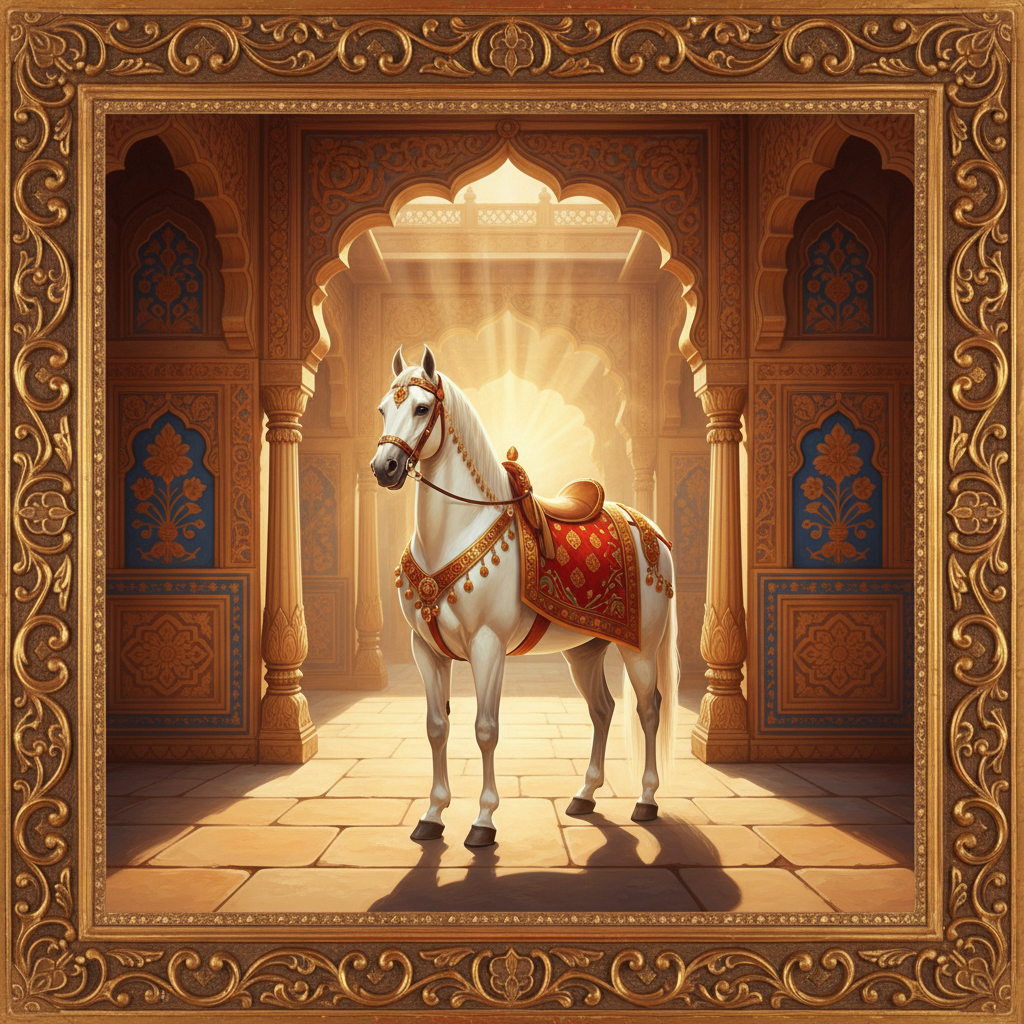
For a higher illustration Swamiji turns to the Yoga Vasistha. King Lavana, a righteous king in the line of Rama’s forefathers, sat in his royal assembly as someone brought him a fine horse. A magician asked to show him some magic, and before the king could answer, he waved his wand. “Immediately the mind of the king became completely different.” He sat still, as if unconscious, and the assembly waited an hour or so. “And then suddenly his whole body quivered and he woke up.” When the minister asked what had happened, the king looked at the magician and told his story. He had mounted the horse and been carried off into the forest, and spent the night clinging to a branch amid owls and frogs. In the morning, hungry, he called out to a young woman passing with a basket of food. “In those times, there was a terrible class distinction.” She belonged to the lowest class, and she looked him up and down. “Don’t you know? I’m not your type of people.” She would give him food only for a favor in return. “Favor for favor.” The favor was to marry her. The marriage was set up at once, and in time there were children. Then came a drought. In the forest his young son cried with hunger, and there was nothing to give him. In utter despair the king made a little fire and jumped into it. “During the jumping stage, his whole body quivers on the throne.” “And at that time, he looks at the magician and the magician vanishes.”
The lake that stays the same
“The story is to bring out a moral, a message.” It is “that world you experience is a magic show.” A year or so later, on an excursion, the king passed through places he remembered. He found his mother-in-law, who did not recognize him but told how her daughter had married a royal personality; his wife had died. He helped them generously and came home. Then he asked the sage Vasishtha what it meant. Vasishtha explained that the world one experiences is what reflects in the mind. “You had the great aspiration to attain enlightenment. So God arranged that somebody else’s story, the whole karmic process, reflect in your mind.” Now he knew how people feel. “And yet, you also know nothing really happened to you.” Swamiji gives the image that holds it together. “It’s like so many things reflect in a lake.” “Reflections create a whole story.” “Really nothing has happened.” “Lake is the same.” When the mind is set on that lake-like consciousness, “Then you realize this world you are living in is somebody’s dream.” There is a second way to read it. “You can put another way, this is God’s glory.” The sun creates rainbows that are illusions, yet what shines through them is the glory of the sun. “The world is a glory of God.” Reflecting on dream, deep sleep and waking, Swamiji concludes, one attains para vairagya, supreme dispassion.
Terms
- vishoka va jyotishmati — the mind beyond grief, filled with increasing light; sutra 36
- pramada — procrastination; the mind that always thinks later will be better
- alasya — laziness and dullness of body and mind
- svastha — healthy; in its deeper sense, abiding in the Self
- andhakaravati — a mind full of darkness, the opposite of jyotishmati
- samadhi — the positive counterpart of deep sleep, reached through profound understanding
- jiva — the individual soul; the patch of blue that takes itself to be separate from the sky
- gunas — the three qualities of nature: sattva, rajas and tamas
- moha — delusion; love dominated by rajas, turned into attachment
- raga — attachment
- avirati — lack of dispassion; the obstacle removed by sutra 37
- vitaraga vishayam va chittam — sutra 37: coloring the mind with thoughts that free it from attachment
- vairagya — dispassion
- yatamana — the first stage of vairagya: striving, remembering the defects of objects
- vyatireka — the second stage: knowing where control is strong and where it is weak
- ekendriya — the third stage: the mind set firmly, so the senses lose their hold
- vashikara — the fourth stage: the mind itself under control
- para vairagya — supreme dispassion, detached from the whole mental process
- svapna nidra jnanalambanam — sutra 38: reflecting on dream and sleep
- prarabdha — the portion of past karma that shapes the present life
- sadhaka — a practitioner of spiritual discipline
For reflection
- When something pleases you, can you pause and ask how long the thrill will last and how much you depend on it?
- Where in your life are you a patch of blue, defined by the clouds, rather than the sky?
- What would change if you began each day with meditation, prayer and japa, and watched what kind of day it became?
About this lecture
Patanjali’s Raja Yoga Sutras, Samadhi Pada, sutras 36 to 38. Lecture 21 by Swami Jyotirmayananda, Yoga Research Foundation. The complete archive of Swamiji’s lectures is free to all.
This study guide is drawn from the archived teachings of Sri Swami Jyotirmayananda.