
The Cinema Screen Analogy
Imagine you are sitting in a movie theater. You laugh, you cry, and you grip the armrest in suspense. For two hours, the characters on the screen are your only reality. Yet, if you were to shift your focus just slightly, you would realize that the tragedy and the comedy are merely light projected onto a white screen. The screen itself is never burnt by the fire in the movie, nor wet by the ocean’s waves.
In the profound philosophy of Vedanta, your life is this captivating movie, and your true Self (Atman) is the unchanging, unaffected screen.
In this week’s illuminating lecture on the Tulsi Ramayana, we delve into the profound allegories hidden within the sacred story of Lord Shiva and Parvati. This isn’t merely mythology; it’s a powerful psychological and spiritual map guiding your own journey of evolution.
The world we experience is a result of “projections”—our mental interpretations of reality. Just as a brain injury can drastically alter one’s perception, our accumulated karma and subtle impressions (vasanas) color and shape everything we see and feel.
The ultimate goal of spirituality is to shift your angle of vision from these transient projections to the eternal screen itself. This screen represents Brahman (the Absolute), utterly untouched by time, space, or any happening. As long as you remain engrossed in the show, you are bound by its drama. True freedom dawns when you realize you are the unblemished screen, the silent witness.
Kailasa: The Summit of Potential
The sacred setting of the Ramayana often describes Mount Kailasa. While a geographical marvel in the Himalayas, mystically, Kailasa represents the highest climax of spiritual ascent within the human being.
- Shiva embodies the Divine Self, the pure consciousness.
- Parvati represents the Intuitive Intellect, the purified mind capable of subtle understanding.
When the intellect (Parvati) is refined and purified through dedicated austerity and spiritual practice, it ascends to meet the Self (Shiva) in the high altitude of deep meditation—the very summit of Kailasa within.
Hari the Stealer vs. Hara the Robber
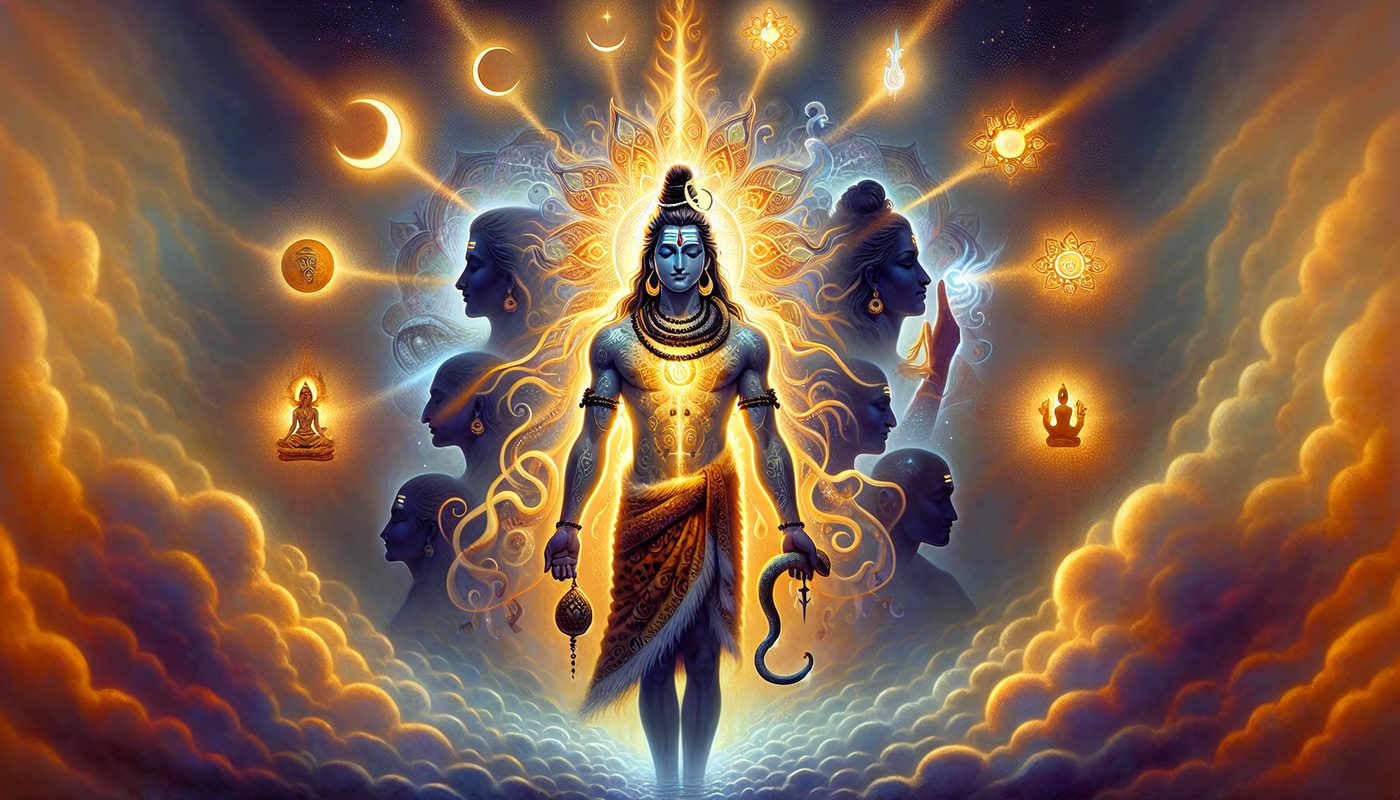
One of the most fascinating distinctions Swami Jyotirmayananda makes is between the complementary roles of Hari (Lord Vishnu) and Hara (Lord Shiva) in our spiritual journey.
- Hari (The Stealer): In the beloved stories of Krishna, He is famously known as the “butter thief.” Allegorically, when you diligently cultivate divine virtues—such as fearlessness, charity, humility, and compassion—God, as Hari, subtly “steals” your heart. You nurture these qualities, and without you even realizing it, divine grace quietly enters your life.
- Hara (The Robber): When the profound light of knowledge (Tattva Jnana) dawns, God plays the role of the robber. He does not wait for you to gradually give up your illusions; He forcefully takes them away. Like the sun relentlessly chasing away darkness, the illuminating wisdom of Shiva decisively destroys the entire “world process” of ignorance and leaves only the absolute Truth.
The Mystical Form of Shiva
Every attribute adorning Lord Shiva serves as a powerful focal point for meditation (Upasana), guiding us deeper into His symbolism:
The Moon
While the human mind naturally waxes and wanes, constantly agitated like the moon, the crescent moon on Shiva’s head is perpetually steady. It represents a mind under perfect control, radiating the cooling nectar of peace and tranquility.
The Serpents
The majestic serpents wrapped around His neck are not a symbol of fear, but of profound mastery. They represent Kundalini Shakti—the cosmic energy and latent spiritual powers that are fully awakened and completely controlled by the accomplished Yogi.
The Ashes (Vibhuti)
These are not merely physical ashes, but the sacred, burnt residue of vasanas (subtle desires and impressions). When the intense fire of wisdom burns away all traces of ignorance and ego, only the glorious, unblemished essence of the Self remains.
Scholar’s Corner
Essential citations from this profound lecture:
- “Ekaṃ sad viprā bahudhā vadanti” (Rig Veda 1.164.46): “Truth is One; sages call It by various names.” This timeless verse beautifully explains why the one ultimate Truth is narrated through the diverse stories of Rama, Shiva, or Krishna, each offering a unique path to the same reality.
- “Abhayaṃ sattvasaṃśuddhiḥ” (Bhagavad Gita 16.1): “Fearlessness and purity of heart.” These are the foundational qualities that are most pleasing to Lord Hari, paving the way for divine grace.
Glossary of Terms
- Trividha Samira: The three types of breeze—Cool (representing an unagitated mind), Gentle (purified impressions), and Fragrant (the complete absence of ignorance).
- Sutradhara: The puppet master or the divine director of the cosmic drama. Lord Rama is understood as the Sutradhara of the entire world-play.
- Antaryami: The Indweller; the eternal Witness within the heart who intimately knows your true thoughts and intentions.
- Kalpataru: The wish-yielding tree, a powerful symbol of the abundance and fulfillment found in complete divine surrender.
Watch the full lecture here: https://youtu.be/hAUw39vZDCY
Join the Digital Ashram for daily inspiration: https://bit.ly/4dgDWKn
This study guide is drawn from the archived teachings of Sri Swami Jyotirmayananda.