
The Two Aspects of Spiritual Movement
When the pressure of daily duties feels heavy, modern minds often seek to escape. We fantasize about leaving our responsibilities behind, believing peace exists only in total isolation. However, Sri Swami Jyotirmayananda offers the ancient, highly practical solution of the sages: we do not need to abandon the world; we must simply change how we interact with it.
In this profound study of the Bhagavad Gita, Chapter 5, Verse 10, Swamiji explains the subtle art of Karma Yoga—how to act powerfully in the world while remaining internally free.
Swamiji explains that true spirituality is not about running away. While one aspect is complete detachment (often associated with Sannyasa), the other is actively flowing into the world, recognizing that all inspirational activities are the glory of God exploding everywhere. This understanding forms the very basis of Karma Yoga.
By acknowledging that you are part of a greater ocean, your actions are no longer limited by the confines of the ego. You become an instrument of the Divine, allowing a higher purpose to guide your endeavors.
The Lotus Leaf: Remaining Untouched
The core of this transformative teaching is found in Bhagavad Gita Chapter 5, Verse 10:
“He who performs actions by invoking Brahman And by renouncing attachment to the fruits of Dharma, is not touched by sin, even as a lotus leaf remains untouched by water.”
Every action we perform—even something as simple as eating—should be seen as proceeding from the Divine within. As Swamiji beautifully notes, a flute creates the best melody when it is completely empty. If the ego “sticks” inside the flute, the music becomes distorted, losing its purity and harmony.
By emptying ourselves of selfish expectations and personal desires for results, we allow pure inspiration and divine energy to flow through us, unhindered.
Aligning with Swadharma
To practice Karma Yoga effectively, one must understand their inner inclinations. Engaging in Swadharma—the work that aligns with your natural temperament and spiritual evolution—brings a double benefit. You can pour intense effort into your tasks, yet you do not feel drained; instead, you feel invigorated and purposeful.
In stark contrast, performing Paradharma—work done purely for external reward or money, often against your true nature—leads to exhaustion and dissatisfaction, no matter the material gain. Swadharma allows your actions to become a natural expression of your evolving self.
Purity of Heart (Chitta Shuddhi)
What is the ultimate goal of our actions in the path of Karma Yoga? It is not worldly success, which Swamiji reminds us is mathematical and fleeting. The true, lasting fruit of action is Chitta Shuddhi, or purity of the heart.
When we perform actions with detachment, our ego undergoes a profound transformation. It shifts from being dark and heavy (Tamasic/Rajasic) to transparent and light (Sattvic). Through this purification, we realize that the true “I” is not the transient body or the fluctuating mind, but the pure Spirit operating through them.
The Monarch versus the Prisoner
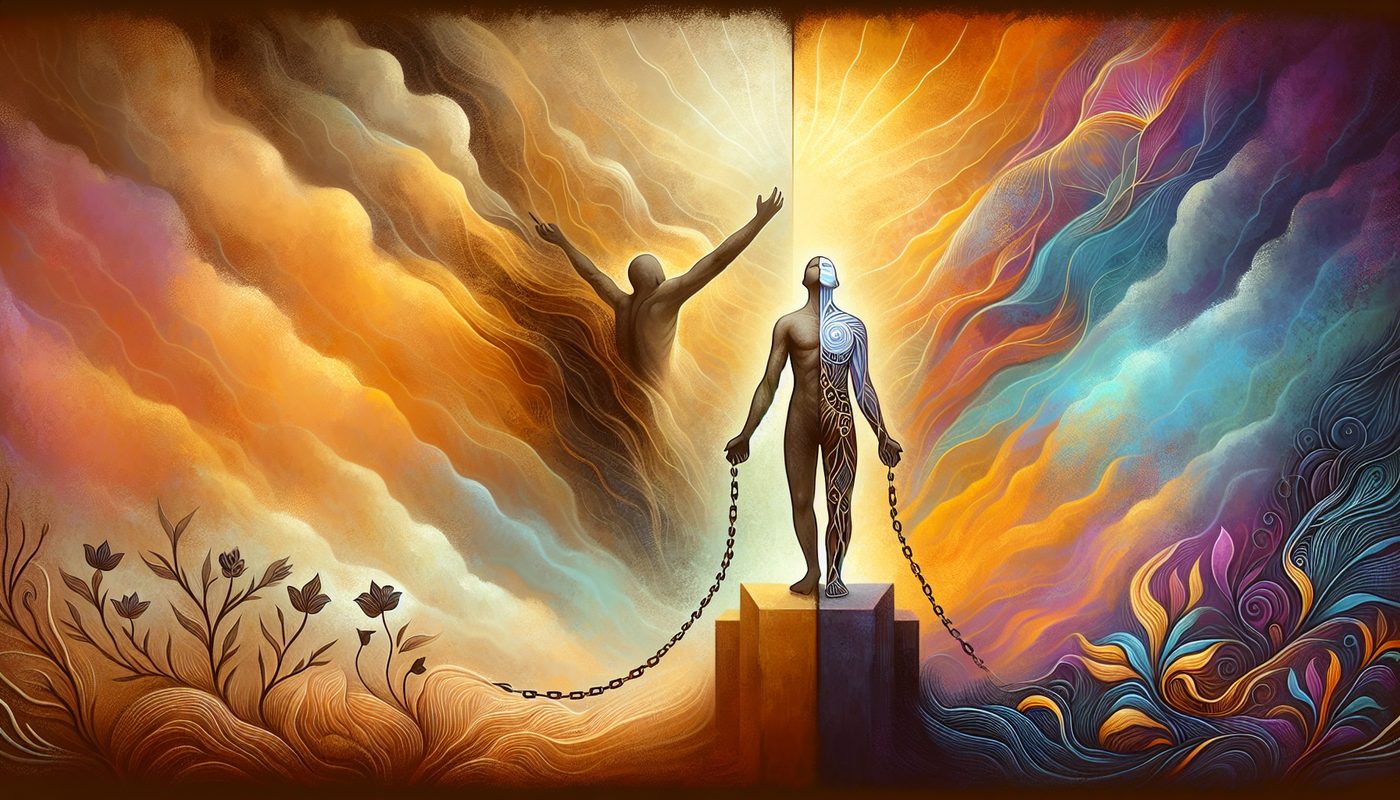
Through this consistent practice of detached action, a profound shift occurs in one’s consciousness. Swamiji paints a striking picture:
- Those caught in worldly attachments live in their bodies like prisoners, compelled by endless desires, anxieties, and the outcomes of their actions.
- But the liberated soul lives in the body like a great monarch, moving freely, acting completely, and remaining internally untouched by the vicissitudes of life.
This is the ultimate freedom offered by Karma Yoga.
Scholar’s Corner
Revisit the profound verse at the heart of this teaching:
“He who performs actions by invoking Brahman and by renouncing attachment to the fruits of Dharma, is not touched by sin, even as a lotus leaf remains untouched by water.”
— Bhagavad Gita, Chapter 5, Verse 10
Glossary of Spiritual Terms
- Brahman: The Absolute Reality; the Supreme Divine Spirit, the ultimate source of all existence.
- Karma Yoga: The path of unselfish action; performing one’s duty without attachment to the results, dedicating all actions to the Divine.
- Sannyasa: Renunciation; an internal letting go of ego and attachment, rather than merely external withdrawal.
- Swadharma: One’s own duty, aligned with one’s natural tendencies, inner calling, and spiritual evolution.
- Paradharma: The duty of another; work that is contrary to one’s inner nature or spiritual path.
- Chitta Shuddhi: Purity of the mind and heart; a state of clarity and freedom from mental impurities.
- Sattvic: A quality of purity, light, harmony, and spiritual clarity, one of the three Gunas (qualities of nature).
Deepen Your Understanding
Watch the full lecture by Sri Swami Jyotirmayananda for a complete exploration of these teachings:
Join Our Community
Connect with fellow seekers and continue your spiritual journey:
This study guide is drawn from the archived teachings of Sri Swami Jyotirmayananda.