This class takes up the Balakanda of the Ramcharitmanas from verse 234. Rama, Lakshmana and Vishvamitra are in King Janaka’s city, where whoever breaks Shiva’s bow will marry Sita. Swami Jyotirmayananda reads the bow as bhava chapa, the pull of the world process, and the wedding not as a happy ending but as the beginning of a purposeful life. On her way to the temple of Gauri, Sita makes an ink out of love and paints Rama on the wall of her heart. Her prayer to the Devi fills most of the class, and nearly every phrase in it opens a teaching. The Devi is one, as the moon is one in every phase, and the chosen deity, the ishta devata, holds every other within it. The chakora bird gazes at the moon all night. Ganesha rides a mouse and bears an elephant head; the six faces of Kartikeya are the six bhagas, the attributes that make God Bhagavan. The purified intellect, sadbuddhi, receives the Divine like flashes of lightning, and in deep fulfillment time becomes a butterfly. Even the Vedas do not know the Devi, because intellectual knowledge is not the experience of God. She creates, maintains and dissolves, as a candle is made, burns a little each day and comes to an end. Everyone wants to exist, to know and to be happy because the Self is sat chit ananda, and the glow worms and deep sleep show how. The things we love are pieces of the heart, scattered across many lives; a thousand Sheshas cannot describe her; those who serve her receive the four fruits of life. Then the garland on the statue falls onto Sita’s neck and the Devi smiles. From this Swamiji gives the three stages of every puja: prarthana, prayer; darshan, vision; and pratiti, experience. The class closes with the verse that begins sunu siya satya asisa, a blessing parents still give to their daughters at marriage.
Where each passage begins
- 00:00 The River That Wanted to Shake Hands
- 02:14 Balakanda, Verse 234: Whoever Breaks the Bow
- 07:38 The Story Does Not End at the Wedding
- 10:10 Sita Paints Rama in an Ink of Love
- 15:39 The Chakora and the Moon
- 17:30 Ganesha’s Mouse and Kartikeya’s Six Faces
- 25:28 Lightning in the Purified Mind
- 28:29 Time Becomes a Butterfly
- 32:40 Creation, Maintenance and Dissolution
- 37:21 Sat Chit Ananda: To Exist, to Know, to Be Happy
- 48:58 The Garland Falls, the Devi Smiles
- 55:13 A Blessing That Is True
Shiva’s bow and the pull of the world process
Rama, Lakshmana and Vishvamitra are in Janakapuri, in the royal palace of King Janaka, where the ceremony of the bow, the Dhanush Yagya, has been prepared. The condition is plain. “Whoever breaks the bow will marry Sita.” The storyline has its own flavor, but the deeper reading applies to every soul. The bow is the pull of the world, a pressure created by God to keep the soul in the world for its evolution. To break it, the soul must glimpse the glory of viveka buddhi, the discriminating intellect, also called sanmati, good understanding. Rama and Sita first see each other through flowers and the lush appearance of nature: these are shubha vasanas, pure subtle impressions, changing the unconscious enough to let the Rama within have a little look into Sita. Strength and good looks do not decide it. “How much good karma you have done, how famous you are, how well liked you are, that doesn’t matter.” “Karmic based experiences, they are not lasting.” “Have you seen anybody taking away money after their death?” “The goal is not in the world of time and space.” The goal is subtle understanding and intuitive vision, reached as the personality becomes more and more involved in righteous deeds, until dharma rises to the highest, which is represented by Rama.
The wedding is a beginning: a purposeful life
“The story doesn’t end, they don’t live happily ever after. Now it starts real.” Life has the same process. “But majority of people live their life without fulfilling the purpose of life.” Once viveka buddhi is united with the soul, there is no going back. “You are going to pursue the purposes of life. You can’t slip back.” “You have no choice. Rama within you will not change his words.”
Sita, the sharp intellect, and an ink made of love
Sita is also called Janaki, daughter of Janaka, and her name has its own implication. “A subtle, penetrative, sharp intellect.” Swamiji links the word to the sharpness of old style plowing equipment, an intellect that “digs into the unconscious.” Tulsidas then writes in a poetic way. On her way to the temple of Bhavani, Gauri Devi, Sita created a mystic ink. “The ingredient of that ink was love for Rama.” The tender heart is crushed like a little leaf to yield it, and on the firmament of her heart she paints the picture of Rama, like a very great artist. With that picture held within her heart, she goes into the temple of the Devi.
One Devi, many names: the moon in its phases and the ishta devata
“Devi may be described as Parvati Devi, Saraswati Devi, Durga Devi.” “But Devi is just one Devi” The moon may be described in its first, second and third quarters, “but the moon has not been has not been quartered.” The same holds for the deity one worships. “Whoever is your Ishta Devata” “That deity is absolute, perfect.” “All devatas and devis are implied in that ishta devata.” That is mature religious understanding. Immaturity builds a big ego that claims its deity can do more than another’s, and Swamiji calls this “a terrible predicament created by immaturity”. Gauri Devi is the absolute source of the entire universe, the same as Brahman, and Brahman can be described as Rama, as Sita, as Vishnu, as Lakshmi.
The chakora and the moon: a mind fixed on the Divine
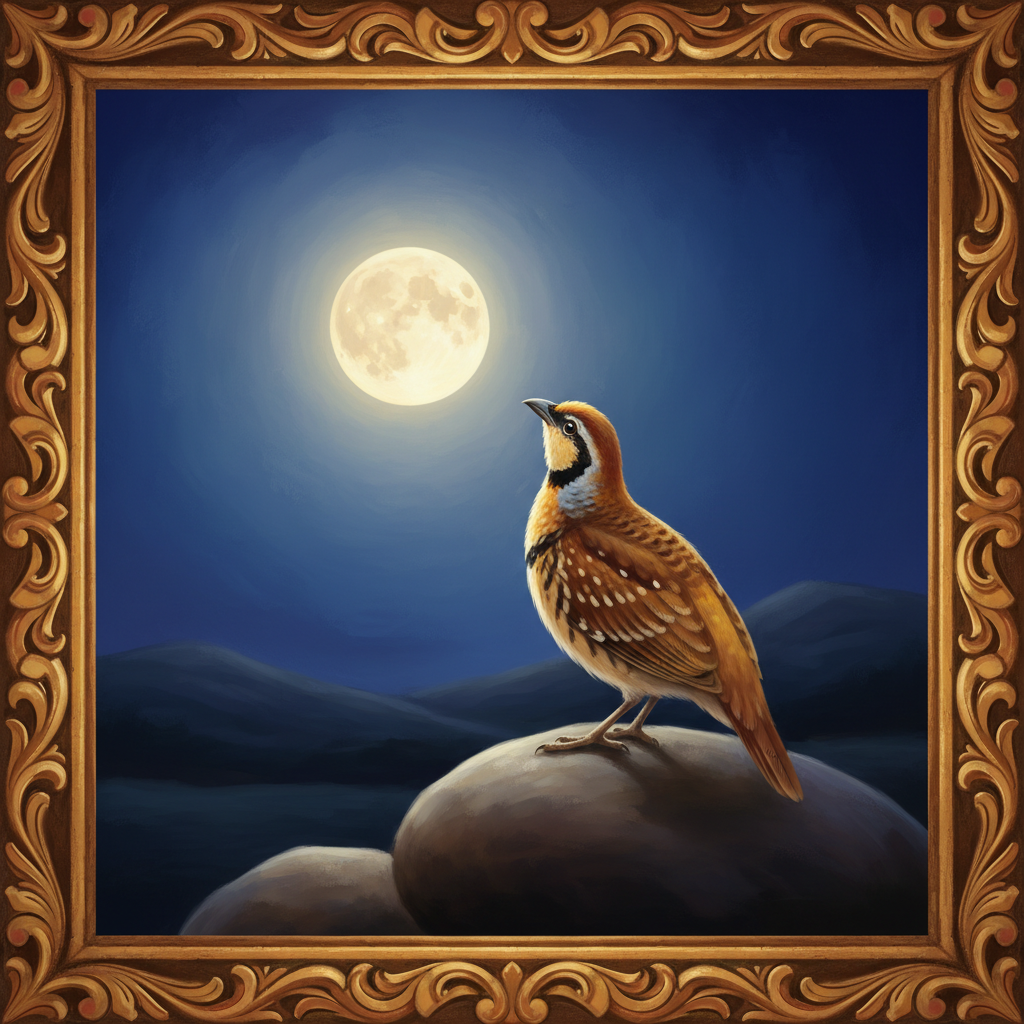
The prayer begins jai jai giribararaja kisori: victory to Parvati, daughter of Himalaya, the king of the mountains. She is constantly focused on the face of Lord Shiva, and Shiva in turn faces Gauri. The old simile is the chakora, a special bird that becomes so fascinated by the moon during the night that it goes on looking all through the night and enjoys a profound relaxation. “Learn from that Chakor” The Devi directs the mind to the source of the entire universe, as father or as mother, “whichever aspect you like.”
Ganesha’s mouse and elephant head: introspection and double consciousness
Parvati is the mother of Ganesha, the first worshipped God, and of Kartikeya, who rides a peacock and has six faces. Ganesha has been envisioned by the sages as the vehicle for knowledge, the embodiment of all scriptures, long before anyone could dream of a computer. “He’s like a big computer.” He rides a mouse, and the mouse represents the subtle potentiality of introspection. In old style homes you hear it at night in the storage area, doing its job. In the same way, even while you sleep, it protects the spiritual strength gathered through “your mantras, your japa that goes on clicking into your unconscious”, changing the impressions there and opening different channels of knowledge. “Elephant head represents double consciousness.” It is awareness of the practical world in all its details while transcending that world at the same time. The trunk shows why: it is an organ of action that can break trees, and an organ of perception that smells. The head is also Om presented in form. The big flapping ears say the rest. “Nothing amiss, nothing misses.” “Gaṇeśa is listening to all.”
Kartikeya’s six faces: the six bhagas of Bhagavan
Kartikeya is the general of the army of the gods. “Army of Gods are divine virtues.” His six faces are the six attributes of God, called bhagas, and that is why God is called Bhagavan. “Bhaga means special divine virtue.” The six are wisdom; vairagya, dispassion; bala, strength; kirti, glorious fame; shri, prosperity; and aishvarya, lordliness. When Kartikeya blesses, he comes with peacock feathers, and the whole atmosphere changes; Rama too is described with a peacock feather on his head.
Mother of the three worlds: sadbuddhi and flashes of lightning
The prayer calls her jagata janani, mother of the universe. The universe has three aspects: the practical, experienced through mind and senses; the subtler, experienced through sentiments and feelings; and the third, experienced as understanding and a revelation of truth. “So all that knowledge that you need in all the three planes proceeds from the mother.” In those not yet prepared for spiritual advancement, that knowledge becomes twisted: mandabuddhi, dull intellect, along with mudhabuddhi, bhrashtabuddhi and dushtabuddhi. When the distorted buddhi is straightened, it is called sadbuddhi. “The divine majesty, divine glory enters your personality like lightning flashes.” The prayer’s own phrase is damini duti gata. “Just like lightning comes and suddenly things light up.” Through meditation and devotion sattva builds up, the twisted intellect is corrected, “And suddenly a little hole appears on your roof.” “Lightning flashes, that’s momentary.” “Now that creates a tremendous change in your personality.” “That’s the strength behind aspirants.”
No beginning, no middle, no end: when time becomes a butterfly
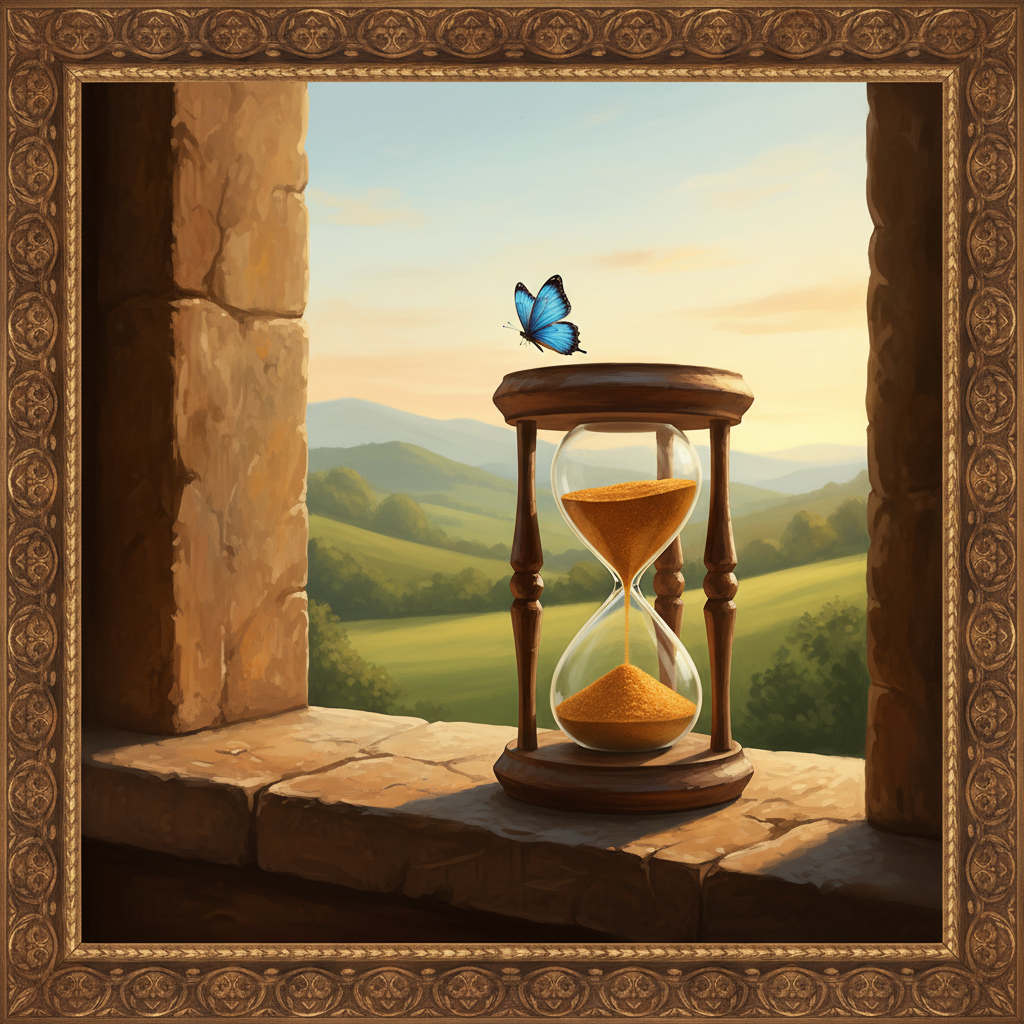
The Devi has no beginning, no middle and no end, and the prayer applies to every ishta devata; Shiva too has none. Beginning, middle and end are concepts of space and time. “Space and time are not realities.” “The reality is eternity, immortality.” Yet even immortality, once heard, becomes a concept the mind starts working upon. A dream makes it plain. All the time you lie on the bed, the dreaming mind may turn philosophical and ask when its world was created and when it will end, and it finds no answer until you wake. “Time doesn’t exist.” It begins to exist when consciousness starts working through the nervous system. “Paralyze your nervous system and there is no time.” “You don’t have to paralyze it, go to sleep.” In deeper fulfillment, time flies. “time that was a heavy reality becomes a little butterfly.” You no longer feel its pressure. “Meditation, Samadhi during that time, time seems to disappear.”
Even the Vedas do not know: the river and the ocean
“The glory of the Devī is beyond limits, immeasurable.” The prayer goes further: “Even Vedas don’t know.” This is no disrespect to the Vedas. Their study gives mental concepts, the best definitions of God, and the intellect may conclude that it now knows Brahman. “In other words, all this is Brahman. It’s just a little thought in your mind.” “So from Vedas you can expect only that much.” Their purpose is that, having understood them by the intellect, you allow your whole life to flow toward the yamas, niyamas, asanas, pranayama and all the limbs of yoga, to samadhi. “Then you realize God, you don’t know God. God is never known.” “If you know God, you become God.” The river flows through rocks, mountains and forests imagining that when it sees the ocean it will shake hands, and “We will have dinner together.” “But actual experience is totally different.” The river enters the ocean. “Intellectual knowledge does not give you the real experience of who that God is”, and that is what it means that even the Vedas do not know.
Creation, maintenance and dissolution: the candle and the tree
Bhava bhava vibhava parabhava karini: she is the cause of bhava, creation, all that has emerged; of vibhava, the maintenance that goes on at the same time; and of the third stage, dissolution. Put simply: srishti, creation; palana, maintenance; samhara, destruction. “Three points apply to the entire creation as well as to every little object.” Your candle was created and came into your hand; now you maintain it. “Every day you burn little little.” And then comes its end. A tree creates its buds, the buds are maintained until they become blossoms, and when the fruit ripens the same divine hand throws it down. The source of all this energy is the Divine Self, here in the form of the mother. “Vishwa Vimohini. The entire world is enchanted.” “She’s the source of all inspiration.”
Sat chit ananda: to exist, to know, to be happy
“She’s the embodiment of Satchidananda.” Every person is fascinated by this three aspected urge. “Everyone wants to exist.” You want to hear that you will live long, jeete raho. Working through the mind you keep looking for security, which comes like an illusion and goes away; the reality behind it is that you are the all existing self. Second, “everyone wants to know, not stay in darkness.” That urge “comes from the fact that you are pure consciousness.” “All knowing self, you are the sun.” “You don’t have to go on looking for how many glow worms exist.” Third, “Everyone wants to be happy. Deep down, everyone is essentially absolute joy.” “A little of that experience comes to you in deep sleep.” Woken sharply and offered the best thing you have ever tasted, you are still annoyed. “Your sleep was giving you better experience.” How does that joy come when nothing is there? “And that leads you to understand that absolute nothing is God.” Understanding sat chit ananda by the intellect “is a great attainment but not your goal. Goal is far.” Realizing it is the goal.
Pieces of the heart and the fulfillment of love
The verse pati devata sutiya mahum praises the Devi, in its literal meaning, as the greatest among pativrata women, profoundly devoted to their husbands. In its spiritual meaning the greatest source of love is God, and Shakti Devi “Loves nothing else but God” “Because in Her mind, in Her wisdom, nothing else exists.” “Love has many aspects, not only just getting married.” Good children, good relatives, good surroundings, recognition by the masses: the human heart keeps working toward the fulfillment of love through countless embodiments. A Hindi song says the heart broke into a thousand pieces, some falling here, some there. “Things you love, they are pieces of your heart.” They go on scattering, “And one remains thirsty, unfulfilled.” In the storyline Sita asks that Rama be her husband. The subtle point is that every soul “is fulfilled by loving God” “Until then there is no fulfillment.”
A thousand Sarasvatis and a thousand Sheshas
The glory of the Devi cannot be described by a thousand Sarasvatis and a thousand Shesha serpents. The Sarasvati the intellect pictures, who gives inspiration before each examination, is a concept that “has not brought you to Sarasvatī Devī as She is.” “Even millions of those Saraswati Devis don’t equal the real Devi.” All experiences of the world are vrittis, thought waves, and thought waves are pictured as the hoods of Shesha. “Allegorical description of cosmic mind is a big serpent.” “So all those thought waves cannot describe the glory of God or goddess.” “Yogaś citta-vṛtti-nirodhaḥ. If you want to realize, all vṛttis must subside.”
Four fruits and the desire left unspoken
Sevata tohi sulabha phala cari: those who serve the Devi receive the four fruits, the four purposes of life: dharma, ethical value; artha, material value; kama, vital and social value; and moksha, liberation. “Life flowing with purpose.” “fulfills these four points in sequence.” The Devi is varadayini, the giver of all this as her blessing, and gods, human beings and sages attain happiness by adoring her lotus feet. Then Sita says the Devi already knows her cherished desire, “Because you abide in the heart of everyone.” So she does not express it. She folds her hands and touches the feet of the statue.
The garland falls and the Devi smiles
Khasi mala murati musukani. Moved by that adoration, “The Devi suddenly became dynamic.” “And the garland for the neck of the Devi fell on the neck of Sita.” “And when Sita turned, Devi was smiling on her face.”
Prarthana, darshan, pratiti: the three stages of every puja
“Every Pooja has three stages, I have explained that before.” First is prarthana: you sit by the Devi and pray. “But prayer awakens in you a special feeling.” “Led by that feeling, you develop a special vision.” “Now the same statue is no longer a statue.” It has become “a profound presence, unimaginable.” That is darshan. Then the virtues you have been praising begin to enter your personality. “You grow in the image of God.” “You develop Devi Sampats”, the divine virtues. That is pratiti, experience: “You wake, get up and your whole neck is filled with flowers.” A subtle enrichment has occurred. “You are not empty” So all three should be attended to, “Instead of rushing away, going into the the puja room, reciting the mantras fast.” and “constantly listening to the sound of the kitchen”. Pray wholeheartedly. “Then allow your mind to have darshan.” In the beginning imagine that the Devi is smiling and that her radiation is coming over you. “And you will gradually begin to actually experience it. That’s called Darshan.” As from a shower, “You leave the puja room charged with spiritual vibrations.”
Sunu siya satya asisa: a blessing that is true
Sita accepts the garland with great reverence and humility, and the Devi, extremely joyous, speaks. “O Sita, listen to my blessing.” “This blessing is true, unfailing.” Her cherished desire will be fulfilled, as the sage Narada foretold: she will marry Rama. Swamiji calls this verse “a kind of mantra.” In families, when young women are getting married, “This type of blessing comes from the parents.” “Oh Sita, listen. My blessing that is absolutely true.” All your cherished desires will be fulfilled. The class closes with the chant of peace, Om purnamadah purnamidam.
Terms
- bhava chapa — the bow of the world process; the pull that keeps the soul in the world for its evolution
- Dhanush Yagya — the ceremony of the bow at King Janaka’s palace
- viveka buddhi — the discriminating intellect, united with the soul as Sita with Rama
- sanmati — good understanding
- shubha vasanas — pure subtle impressions in the unconscious
- ishta devata — the chosen deity, in which all devatas and devis are implied
- chakora — the bird that gazes at the moon all through the night
- bhaga — a special divine virtue; the six bhagas make God Bhagavan
- jagata janani — mother of the universe
- sadbuddhi — the straightened, purified intellect
- mandabuddhi — dull intellect, one of the twisted forms of buddhi
- damini duti gata — whose form shines like lightning
- srishti, palana, samhara — creation, maintenance and destruction
- Vishwa Vimohini — she by whom the entire world is enchanted
- sat chit ananda — existence, consciousness, bliss: the urge to exist, to know and to be happy
- pativrata — a woman profoundly devoted to her husband
- vritti — a thought wave of the mind
- Shesha — the cosmic serpent, an allegory of the cosmic mind whose hoods are thought waves
- phala cari — the four fruits: dharma, artha, kama and moksha
- varadayini — the giver of boons
- prarthana — prayer, the first stage of puja
- darshan — vision, the second stage, when the statue is no longer a statue
- pratiti — experience, the third stage, when the virtues enter the personality
- Devi Sampat — divine wealth, the virtues of the Devi growing in the devotee
For reflection
- Why does Swamiji say the story of Rama and Sita only starts at the wedding, and what does breaking the bow begin in a life rather than end?
- What separates knowing about the Devi through the Vedas from the river entering the ocean, and where does that leave study in spiritual life?
- When you next sit for prayer, what would it take to move from prarthana to darshan, so that the statue is no longer a statue?
About this lecture
Tulsi Ramayana (Sri Ramcharitmanas of Goswami Tulsidas), Balakanda, from verse 234. Lecture 97 by Swami Jyotirmayananda. The complete archive of Swamiji’s lectures is free to all.
This study guide is drawn from the archived teachings of Sri Swami Jyotirmayananda.