
Two Kinds of Strength: Ravana's Power, Sita's Despair and the Grace of Mandodari
In the morning satsanga of October 4, 2026, Swami Jyotirmayananda contrasted the might of Ravana with spiritual heroism, taught that despair insults the soul, and showed how thought, word and deed purify the heart until one becomes one's own best friend.
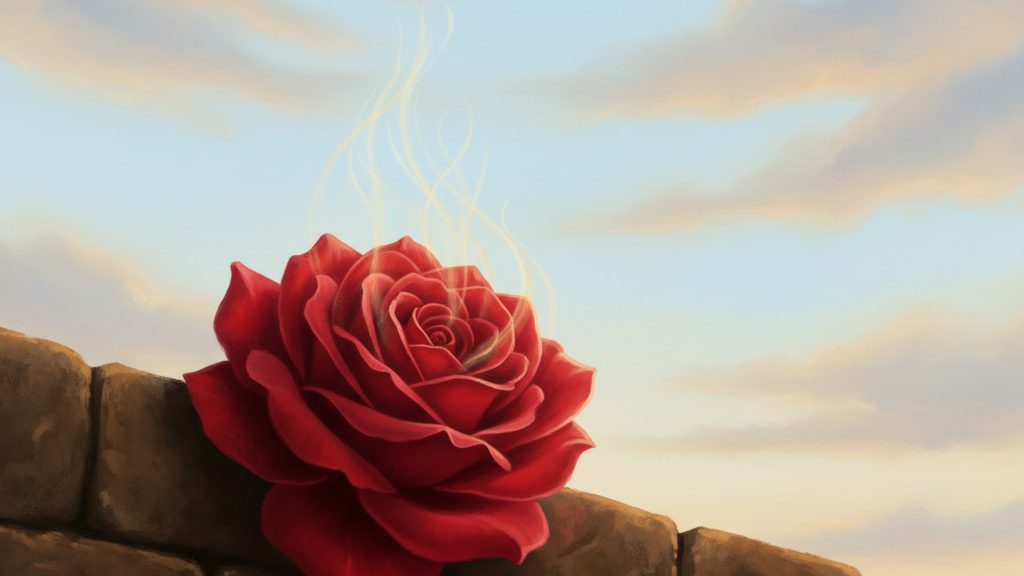
The satsanga opened with adorations to Lord Rama of the Raghu dynasty, whose complexion is like a blue lotus, tender and delightful in appearance, with Sita at his left side and bow and arrow in his hands. After the Hare Rama mantra, Swamiji read a poem, "The Aroma of Eternity." You are indeed a rose, it begins. Do not stay with the buds, nor with the glistening leaves, nor with the blossoming flowers. Continue to grow. Be the very spirit of sweet fragrance, soaring beyond the confines of the garden, "Beyond the confines of family and friends," beyond the confines of time and space. Be the very Self that abides in every name and form. Discover "I am Brahman, the Absolute Self," and fill the world with the aroma of eternity.
Rama, the Soul That Shines With Virtue
Returning to the Ramayana, Swamiji explained that Rama is the soul that shines with divine virtues. Lakshmana represents the characteristics of success in sadhana. "It refers to Raja Yoga," he said, the practice of all eight steps, and the virtuous qualities that mark real progress.
Essentially, Swamiji taught, Rama and Sita are never to be separated. But the whole life and sadhana of the seeker moves in the realm of ignorance, and all sadhana exists to remove that ignorance. Until then, though one has the potentiality of being Shiva, of being Rama, "You are wandering like ordinary human being," full of grief. Once that union takes place within, Rama and Sita have come together.
He added a brief word on ritual. Ritualistic practice supports sadhana and is very important: everything in order in the puja room. But as one advances, spiritual movement is no longer limited to the puja room, and the ritualistic state becomes sublimated.
The Might of Ravana
Ravana's strength, Swamiji explained, was based upon his Vedic study and his practice of austerity, and it gave him great power. The question is how to handle power. In the immature state the rule is "Might is right": if you have strength, then whatever you do, you are right. That is how Ravana behaved.
Yet everything Ravana does is leading him toward confronting Rama and being sublimated. The powers given to him by Shiva, Brahma and other gods were misused, and so "These powers have become cursed power." There is a curse behind them, because they do not give real understanding. Spiritual heroism is a different strength altogether, and Swamiji asked the listeners to see the difference between the two.
When Sita Despairs
Swamiji then turned to the moment when Sita has come to a state of despair and even thinks of ending her life. Holding on to such a thought, he taught, insults the spiritual potentiality of your soul. "You are becoming your great enemy." If one holds on to the thought of despair, sadhana becomes immature. He gave it as a profound mantra: no matter what terror or challenge you may face, never lose your inner faith.
Thought, Word and Deed
This, Swamiji said, refers to three types of spiritual inspiration: thought, word and deed. In deed, handle the practical realities of life with graciousness. In word, watch how you use your speech. In thought, cultivate the inner goodwill that you spread out to all. That movement brings nourishment to the heart, and as the heart develops purity, the mind becomes increasingly purified.
"You have forgotten your essential nature." The moment the mind is purified, that memory comes back: you are always Shiva, not jiva. In that state the three knots of the heart that obstruct your movement are removed. Swamiji named them mala, vikshepa and avarana.
Mandodari's Subtle Help
Mandodari, Swamiji explained, has a divine source. She brings out graciousness in thought, word and deed. Sita has her impact on Ravana, and Mandodari supplements it, telling Ravana the same thing, so that Ravana is weakened "In a very subtle way." That becomes the basis for all the sons of Ravana to be sublimated, until Ravana himself.
Clothing That Never Grows Old
Sita's clothes, Swamiji said, never become old. All the qualities you develop in pursuing the spiritual life are your clothing. When you consider "I am body," your clothing needs to change every day. But when you rise to jnana buddhi, the understanding that you are not the body, the clothing you have is divine virtue. It cannot change. "They become renewed."
Swamiji recited a verse to Rama as the bestower of auspiciousness, mangala prada. With body identity, he explained, today is auspicious and tomorrow inauspicious. Without it, the world is always auspicious.
Your Own Best Friend
Swamiji closed with prayers for the welfare of all and a blessing: may you be invested with an ever-glowing robe and wonderful ornaments, and may God bless you with shakti and bhakti that give spiritual progress, remove the forces of ignorance and lead you to discover the higher Self. When you are your own worst enemy, everything is amangala, inauspicious. "When you become your best friend," everything is mangala.
Terms in This Satsanga
- sadhana — spiritual practice; Swamiji taught that all of it exists to remove ignorance.
- Raja Yoga — the yoga of eight steps, represented by Lakshmana.
- jiva — the individual soul that forgets it is Shiva.
- mala, vikshepa, avarana — impurity, distraction and veiling, the three knots of the heart.
- jnana buddhi — the understanding of wisdom that one is not the body.
- mangala / amangala — auspicious and inauspicious.
Follow the WhatsApp channel at jyotirmayananda.org/whatsapp for each morning's notes.