
The Garland of Victory: Sita's Ornaments, the Sealed Cave and the Fall of Bali
In the morning satsanga of October 8, 2026, Swami Jyotirmayananda read the ornaments of Sita, the sealed cave and Rama's arrow as the inner story of every seeker, in which divine grace finally distinguishes the higher self from the lower.
The satsanga opened with a meditation on Lord Rama, the lord of the Raghu dynasty, his complexion like a blue lotus, Sita seated at his left, a powerful bow and arrow in his hands. After the Hare Rama mantra, Swamiji read a poem, "Celestial Melody." It asks that the celestial melody become incarnate in one's life: that every sentiment bloom with love, every thought sparkle with light, and every action beam with beauty. The mind glimpses the grandeur of the soul, losing itself in expanding horizons, while the surge of life enters the ocean of the absolute Self. The poem closes on the realization: "I am the Absolute."
The Ornaments of Sita
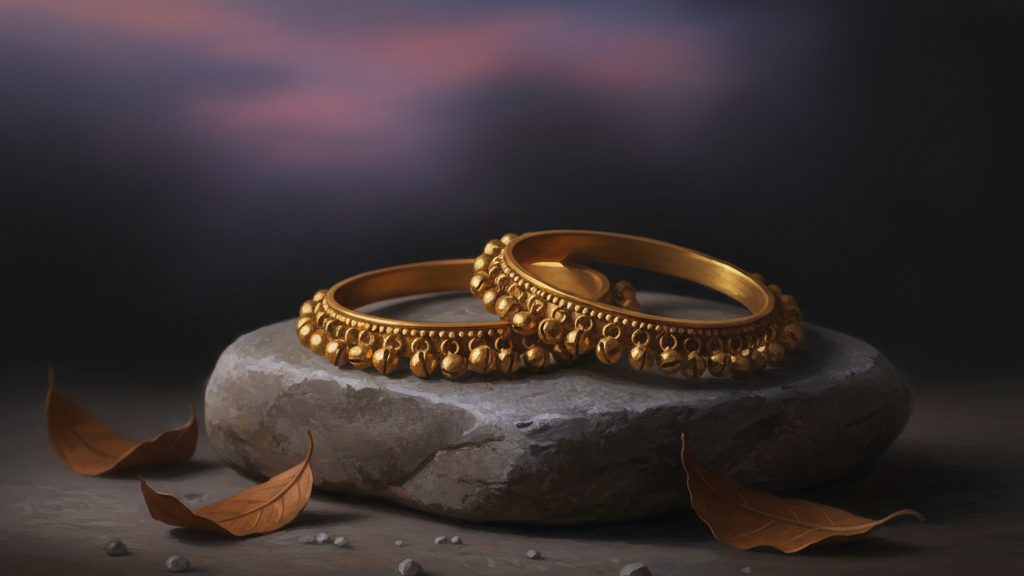
Swamiji returned to the moment when the ornaments of Sita are brought before Rama and Lakshmana. Rama immediately recognizes her ornaments of the face, of the ears, of the nose, of the arms. Lakshmana recognizes none of these. He recognizes only the ornaments of her feet.
Try to understand this, Swamiji said, in terms of your own sadhana. As you follow spiritual practice, certain divine qualities begin to develop in the personality; that is the Rama and Lakshmana movement. One who has reached the Rama stage comes to satsanga and to a saintly Guru and becomes inspired by every detail. But if you have not reached the Rama stage, turn to the Guru not to study his face and its details. Turn instead to the feet. That is why devotees in satsanga are constantly looking for how they can touch the feet. They recognize the feet and the ornaments of the feet, while all the other details remain in the hands of Rama.
The Battle in the Heart
Bali, Swamiji taught, is the lower self, the self that inflates the ego, and harsh words come out of the lower self. Under the ego, the pure intellect becomes twisted, a deluded buddhi.
He then introduced the background of the story. The demon Dundubhi was killed by Bali, and blood fell in the ashram of the sage Matanga. Matanga Muni cursed that whoever came into that area, his head would be broken to pieces. Sugriva and Bali used to be together, but now they are separated. Sugriva lives under the protection of the ashram; Bali lives in his own residence.
All this, Swamiji said, happens in your very heart. When you realize, the heart is the residence of God. But until then, "Your heart is residence of higher self and lower self." The battle goes on, and the heart does not have clarity. In the early stage you have to prepare the lower self to come under the control of the higher self. Swamiji recalled the teaching uddhared atmanatmanam: "You rescue yourself by yourself." Your own lower self is degrading you, drawing you to all types of misery.
Then, through good karma, you turn to satsanga. "Now seek help from Satsanga." The buddhi becomes pure, not twisted, and you begin to see that all the strength Bali had created is the strength of the lower self. The majority of people in the world live guided by egoism. Yet every prosperity, every grand attainment, is perishable. In a lifetime one sees tremendous changes: sometimes very prosperous, sometimes completely defeated, and at the end of life everything one called one's world is gone. Pure buddhi gives insight into how to stop being drawn into the cycle of birth and death, and how to stop looking for happiness and prosperity in a transient world.
Now the movement becomes dynamic, because Rama has joined. The higher self receives the great support of Rama, and with that support the intellect sees all the negative things done by Bali, and how he has to be sublimated.
The Sealed Cave
Bali went into a cave to fight a demon. Sugriva waited with great patience. That waiting, Swamiji said, is allegorically described: Sugriva brought a big rock and shut the gate of the cave. The roaring at that time he interpreted as Bali's death, because that is what Sugriva was constantly expecting, the lower self to move away. Following his expectation, he went back and became the ruler, and great happiness filled the kingdom.
Suddenly Bali appeared. Because Bali lacked buddhi, instead of recognizing the valor and the good qualities of Sugriva, he simply fought him and kicked him out.
The Garland of Victory
Sugriva told all this to Rama. Now that Rama is there, Sugriva becomes full of valor and enters a dynamic battle, and even that stage is not easy. From behind the bushes Rama watched the fight but could not strike Bali, because both brothers seemed completely alike. So it is with the higher self and the lower self before they have come to a healthy state: the higher self looks like the lower, "and sometimes lower self looks like higher self," until a distinction is made.
Bali kept a garland from Indra. By Rama's instruction, Lakshmana placed a garland on Sugriva, the Vijay Mala, the garland of victory. "That will give you victory." Now there was a distinction between the two. Yet Rama still watched until both fought an intense battle, and Bali, as if ready to kill Sugriva, was about to strike. Then Rama's arrow struck, and Bali fell.
That fall became the period in which Bali discovered that all his greatness had been backed up by his egoism. Rama opened his eyes, and Bali became aware. With that awareness Bali asked for moksha. The whole scene changed, and he praised Sugriva.
Grace Makes the Distinction
A major part of sadhana, Swamiji concluded, is this: the higher self and the lower self go on fighting with each other, and there is so much confusion that no distinction can be seen between them. Learn through satsanga and receive the divine grace of Rama. The moment Rama enters, the distinction begins to appear. It is a very profound episode, allegorical, and it applies to every individual. The satsanga closed with a prayer for the grace of God to shower over all, and a prayer for the well-being of all.
Terms in This Satsanga
- satsanga — the company of truth; where the seeker turns for help against the lower self.
- buddhi — the intellect; twisted by the ego, made pure through satsanga.
- sadhana — spiritual practice, in which the divine qualities develop.
- uddhared atmanatmanam — "You rescue yourself by yourself."
- Vijay Mala — the garland of victory Lakshmana placed on Sugriva.
- moksha — liberation; what Bali asked for once Rama opened his eyes.
Follow the WhatsApp channel at jyotirmayananda.org/whatsapp.